ERC-5484: burn authority is agreed before a soulbound token is issued
The consensual soulbound interface separates non-transferability from permission to burn. That permission is fixed rather than silently rewritten after issuance.
Full analysis selected. Choose Quick brief to read the key points first.
WFN QUICK BRIEF · UNDER 1 MIN
The short version
MODE 2 OF 2
What the primary record establishes
ERC-5484, created on 17 August 2022 and marked Final, defines soulbound tokens with immutable ownership and predetermined burn authorization. Issuer and receiver agree on burn authority before issuance. Ethereum — ERC-5484, Final ↗
What the distinction changes
Non-transferable does not necessarily mean impossible to remove. Whether a token can be burned depends on the declared authorization rather than the marketing label soulbound.
What to check before drawing a conclusion
For a credential integration, make consent and burn authority visible before acceptance. Recovery procedures require their own application design and cannot be guessed from immutable ownership.
Quick Brief is a reading aid. The full article and source trail stay on this page.
WFN STORY COMPASS
Choose your reading angle
Switch between the reported record, market context and open questions. Status labels distinguish claims from findings.
All context layers are visible. Choose a lens to jump to that part of the story.
Original WFN vector illustrationWFN · 28 October 2026
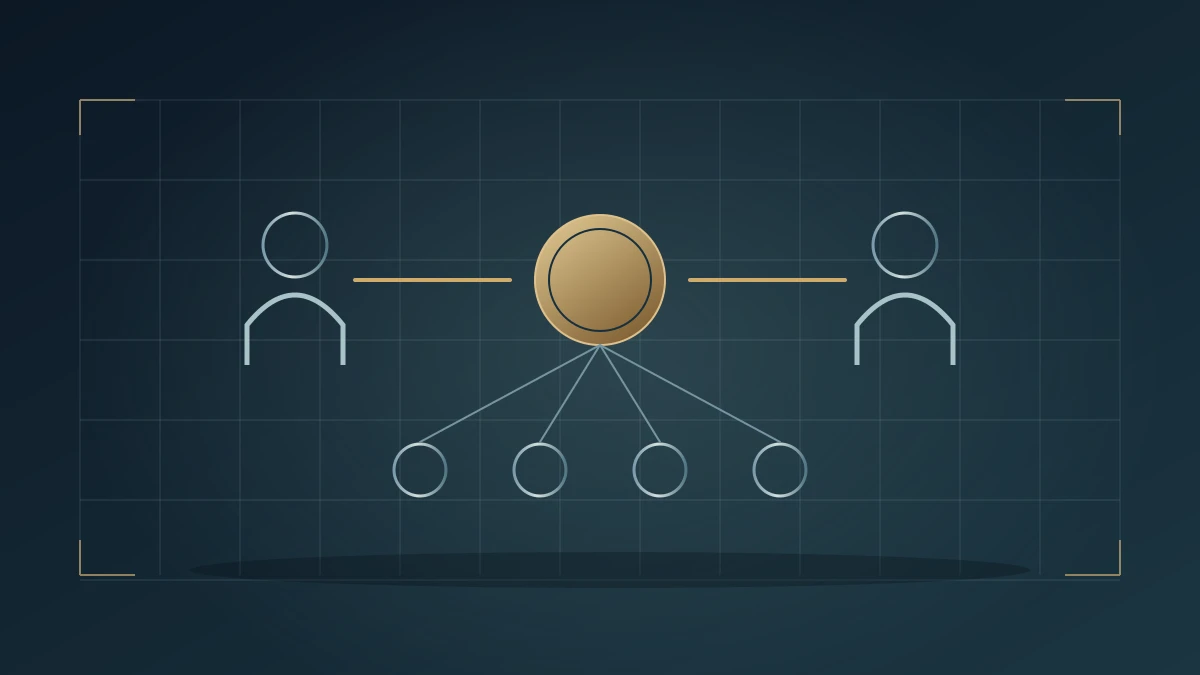
Editorial noteSource-based explanation with original WFN analysis. Historical records retain their dates; numerical examples are illustrative. The original vector illustration is conceptual and is not documentary evidence.
WFN REALITY LEDGER
What is on the record?
Primary-source explainer
Primary-source explainer
Primary record / reference periodFinal specification, created 17 August 2022
The linked source supports the documented record; WFN interpretation and illustrative examples are separate.
The consensual soulbound interface separates non-transferability from permission to burn. That permission is fixed rather than silently rewritten after issuance.
01 · VERIFIED RECORD
What the primary record establishes
ERC-5484, created on 17 August 2022 and marked Final, defines soulbound tokens with immutable ownership and predetermined burn authorization. Issuer and receiver agree on burn authority before issuance. Ethereum — ERC-5484, Final ↗
The burnAuth value must be presented to the receiver before issuance and cannot change afterwards. The specification distinguishes issuer-only, owner-only, both and neither permissions. Ethereum — ERC-5484, Final ↗
02 · WFN EDITORIAL ANALYSIS
What the distinction changes
Non-transferable does not necessarily mean impossible to remove. Whether a token can be burned depends on the declared authorization rather than the marketing label soulbound.
Burning the token also does not erase historical blockchain records. Nor does the interface independently prove that an associated credential was factually correct.
03 · REVIEW POINTS
What to check before drawing a conclusion
For a credential integration, make consent and burn authority visible before acceptance. Recovery procedures require their own application design and cannot be guessed from immutable ownership.
This is a historical interface, not a new October launch. The practical review connects contract permissions with the issuer’s actual revocation and support policies, keeping code behavior and real-world claims distinct.