Full analysis selected. Choose Quick brief to read the key points first.
WFN QUICK BRIEF · UNDER 1 MIN
The short version
MODE 2 OF 2
What the primary record establishes
EIP-5656, created on 1 February 2021 and marked Final, introduces MCOPY for copying EVM memory areas. Its arguments identify destination, source and length. Ethereum — EIP-5656, Final ↗
What the distinction changes
That overlap rule matters when reviewing low-level implementations. A manually written copy loop can have different behavior if it overwrites unread source bytes.
What to check before drawing a conclusion
Compare like-for-like implementations and input sizes before claiming savings. Memory expansion and surrounding operations remain part of the total transaction cost.
Quick Brief is a reading aid. The full article and source trail stay on this page.
WFN STORY COMPASS
Choose your reading angle
Switch between the reported record, market context and open questions. Status labels distinguish claims from findings.
All context layers are visible. Choose a lens to jump to that part of the story.
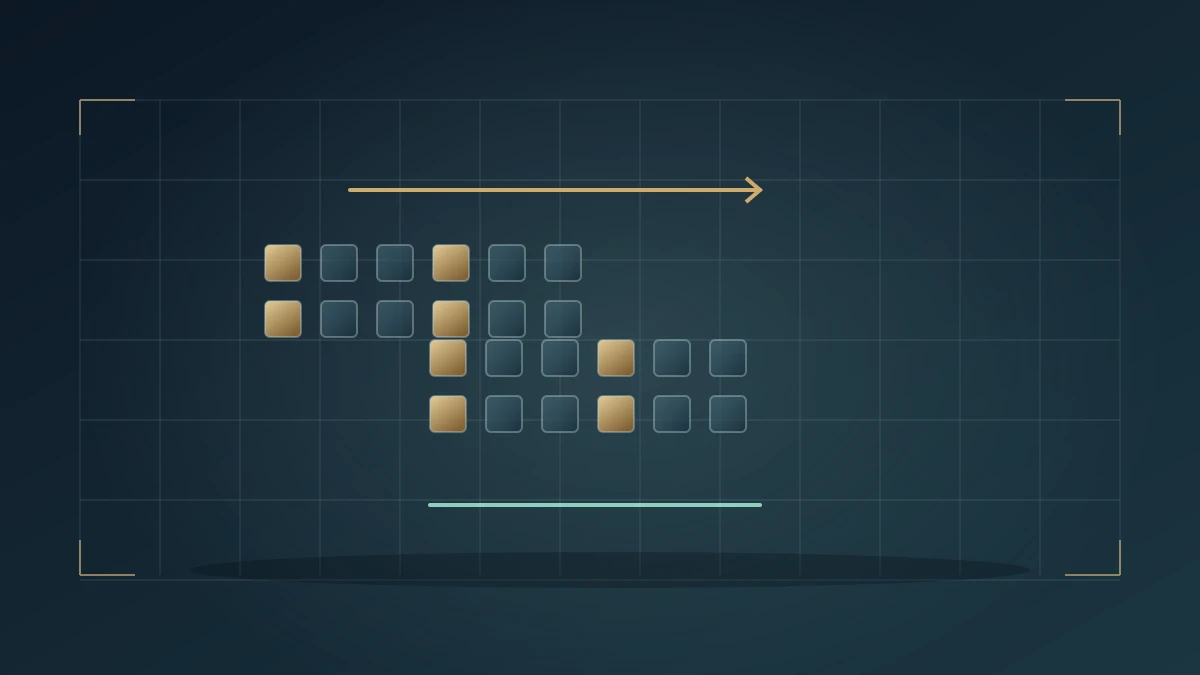
Original WFN vector illustrationWFN · 28 October 2026
Editorial noteSource-based explanation with original WFN analysis. Historical records retain their dates; numerical examples are illustrative. The original vector illustration is conceptual and is not documentary evidence.
WFN REALITY LEDGER
What is on the record?
Primary-source explainer
Primary-source explainer
Primary record / reference periodFinal specification, created 1 February 2021
The linked source supports the documented record; WFN interpretation and illustrative examples are separate.
The EVM instruction addresses memory-copying overhead. It is not a way to duplicate persistent storage or transfer token balances.
01 · VERIFIED RECORD
What the primary record establishes
EIP-5656, created on 1 February 2021 and marked Final, introduces MCOPY for copying EVM memory areas. Its arguments identify destination, source and length. Ethereum — EIP-5656, Final ↗
The specified semantics allow source and destination to overlap, with the effect of copying through an intermediate buffer. The gas calculation accounts for length and any necessary memory expansion. Ethereum — EIP-5656, Final ↗
02 · WFN EDITORIAL ANALYSIS
What the distinction changes
That overlap rule matters when reviewing low-level implementations. A manually written copy loop can have different behavior if it overwrites unread source bytes.
The instruction concerns execution memory, not the persistent storage slots of an account. Copying bytes also does not transfer ownership of assets represented by those bytes.
03 · REVIEW POINTS
What to check before drawing a conclusion
Compare like-for-like implementations and input sizes before claiming savings. Memory expansion and surrounding operations remain part of the total transaction cost.
The historical specification establishes an operation’s behavior, not a universal fee discount for an application. Review offsets, length and the data’s meaning alongside the opcode rather than treating a faster copy as proof of overall correctness.