Full analysis is selected. Choose Quick brief to scan the key points first.
WFN QUICK BRIEF · UNDER 1 MIN
The short version
MODE 2 OF 2
What the primary record establishes
TreasuryDirect explains that separating a Treasury security’s principal and interest produces individual zero-coupon securities, each with a single payment at its own maturity. This is an example of identifying a dated cash flow, not a claim that a binary contract has Treasury credit quality. US TreasuryDirect — STRIPS and individual future payments ↗
What the distinction changes
A contingent payment adds an outcome question to that timing question. It is therefore incomplete to compare a contract price directly with its maximum future receipt and call the difference profit. The customer may receive zero, and cash may remain unavailable until settlement.
What to check before drawing a conclusion
Put purchase time, observation time and actual payment time on the same cash-flow timeline. Record fees and the source of any discount or funding assumption. Do not substitute a Treasury rate for a product’s counterparty and liquidity risks without justification.
Quick Brief is a reading aid. The full article and source trail stay on this page.
WFN STORY COMPASS
Choose your reading angle
Move between the reported record, market context and open questions. Status labels keep claims distinct from findings.
All context layers are visible. Choose a lens to jump to that part of the story.
Original WFN vector illustrationWFN · 18 October 2026
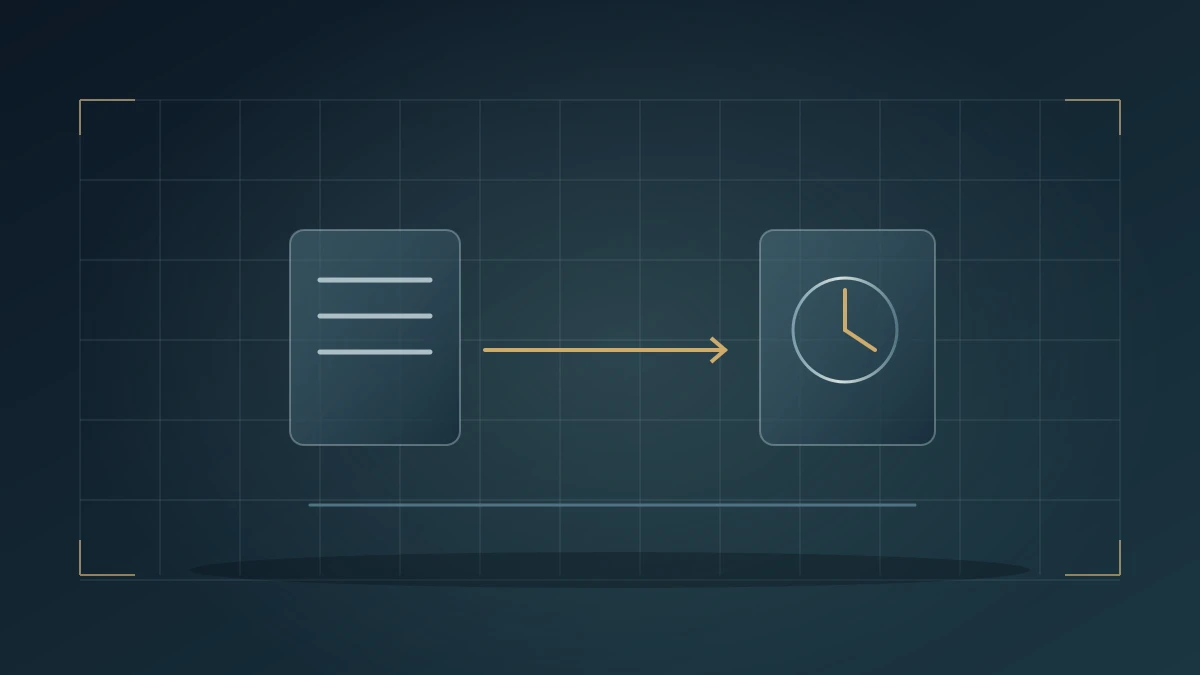
Editorial noteSource-based explanation with original WFN analysis. Historical records retain their dates; numerical examples are illustrative. The original vector illustration is conceptual and is not documentary evidence.
WFN REALITY LEDGER
What is on the record?
Primary-source explainer
Primary-source explainer
Primary record / reference periodTreasuryDirect cash-flow explanation; WFN illustrative discounting model
The linked source supports the documented record; WFN interpretation and illustrative examples are separate.
A fixed nominal receipt still has a payment date. Ignoring time and funding can distort comparisons between otherwise similar contract prices.
01 · VERIFIED RECORD
What the primary record establishes
TreasuryDirect explains that separating a Treasury security’s principal and interest produces individual zero-coupon securities, each with a single payment at its own maturity. This is an example of identifying a dated cash flow, not a claim that a binary contract has Treasury credit quality. US TreasuryDirect — STRIPS and individual future payments ↗
For WFN’s purely illustrative model, a certain 100-unit payment due in one year has a present value of 100 divided by 1.05, or about 95.24, at an assumed annual discount rate of 5%. The rate is hypothetical; the calculation is not a current yield quote.
02 · WFN EDITORIAL ANALYSIS
What the distinction changes
A contingent payment adds an outcome question to that timing question. It is therefore incomplete to compare a contract price directly with its maximum future receipt and call the difference profit. The customer may receive zero, and cash may remain unavailable until settlement.
Two instruments with the same headline maximum can also have different payment dates, collateral treatment and funding needs. A price difference cannot automatically be assigned to a different event probability without checking those other terms.
03 · REVIEW POINTS
What to check before drawing a conclusion
Put purchase time, observation time and actual payment time on the same cash-flow timeline. Record fees and the source of any discount or funding assumption. Do not substitute a Treasury rate for a product’s counterparty and liquidity risks without justification.
This model explains why timing belongs in valuation; it does not identify a fair price or an opportunity. WFN makes no claim that a customer can borrow, reinvest or exit at the assumed rate. A defensible comparison should state each of those assumptions explicitly.