Full analysis selected. Choose Quick brief to read the key points first.
WFN QUICK BRIEF · UNDER 1 MIN
The short version
MODE 2 OF 2
What the primary record establishes
Kalshi’s orderbook documentation returns bid levels for YES and NO. It explains that a YES bid at price p is equivalent to a NO ask at 1−p, with the reciprocal relationship for NO bids and YES asks. Kalshi — Understanding the Orderbook Response ↗
What the distinction changes
For an illustrative NO bid of USD 0.37, the complementary YES ask is USD 0.63. That is an explanation of the quote representation, not a live market observation or a probability forecast.
What to check before drawing a conclusion
WFN would label side, price convention, size and observation time in a market display. An empty opposite book does not justify inventing an executable ask, and a stale snapshot does not prove current liquidity.
Quick Brief is a reading aid. The full article and source trail stay on this page.
WFN STORY COMPASS
Choose your reading angle
Switch between the reported record, market context and open questions. Status labels distinguish claims from findings.
All context layers are visible. Choose a lens to jump to that part of the story.
Original WFN vector illustrationWFN · 23 October 2026
Editorial noteSource-based explanation with original WFN analysis. Historical records retain their dates; numerical examples are illustrative. The original vector illustration is conceptual and is not documentary evidence.
WFN REALITY LEDGER
What is on the record?
Primary-source explainer
Primary-source explainer
Primary record / reference periodKalshi orderbook API documentation checked 23 October 2026; illustrative prices
The linked source supports the documented record; WFN interpretation and illustrative examples are separate.
The API describes YES and NO bids. Reading a NO bid as another YES bid produces the wrong spread and execution comparison.
01 · VERIFIED RECORD
What the primary record establishes
Kalshi’s orderbook documentation returns bid levels for YES and NO. It explains that a YES bid at price p is equivalent to a NO ask at 1−p, with the reciprocal relationship for NO bids and YES asks. Kalshi — Understanding the Orderbook Response ↗
The documented fixed-point response uses orderbook_fp with yes_dollars and no_dollars arrays. Levels contain price and quantity; the orderbook examples identify the highest bid at the end of each ascending array. Kalshi — Understanding the Orderbook Response ↗
02 · WFN EDITORIAL ANALYSIS
What the distinction changes
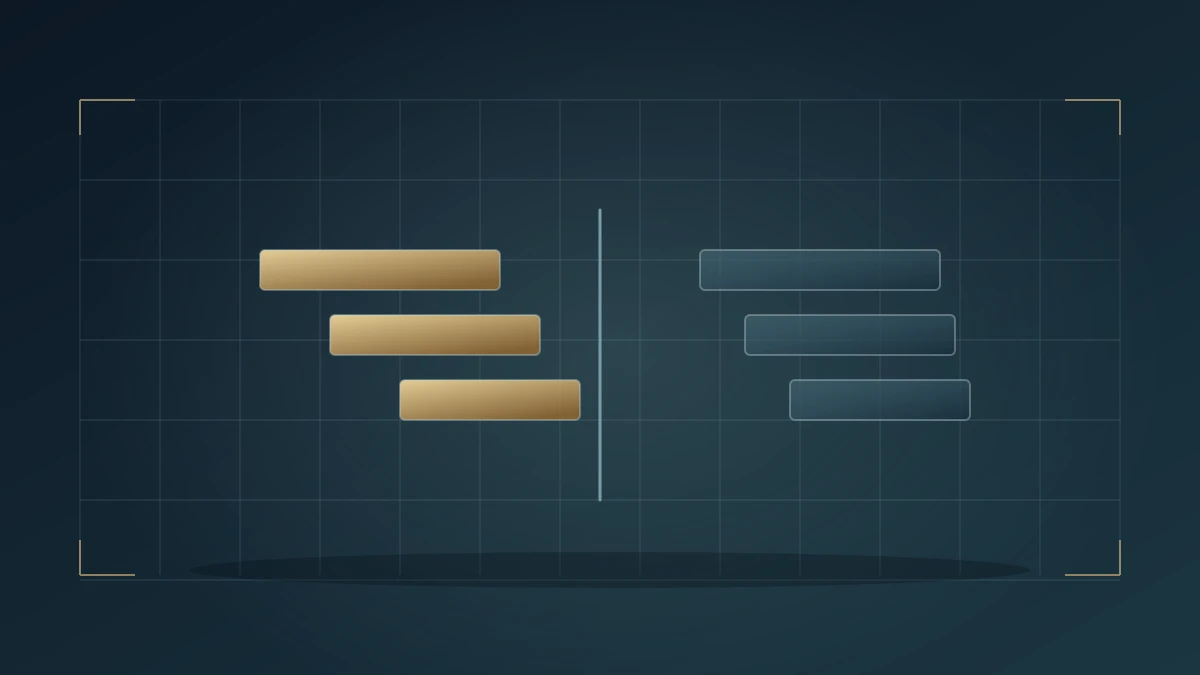
For an illustrative NO bid of USD 0.37, the complementary YES ask is USD 0.63. That is an explanation of the quote representation, not a live market observation or a probability forecast.
A spread calculation should therefore compare a YES bid with its corresponding YES ask, not subtract the two raw best bids. Quantity remains important: the best displayed price may cover only part of a proposed trade.
03 · REVIEW POINTS
What to check before drawing a conclusion
WFN would label side, price convention, size and observation time in a market display. An empty opposite book does not justify inventing an executable ask, and a stale snapshot does not prove current liquidity.
This article concerns one venue’s event-contract API. Its representation should not be assumed for every binary-options platform. Contract rules, fees and actual execution determine economic results beyond the arithmetic of complementary prices.