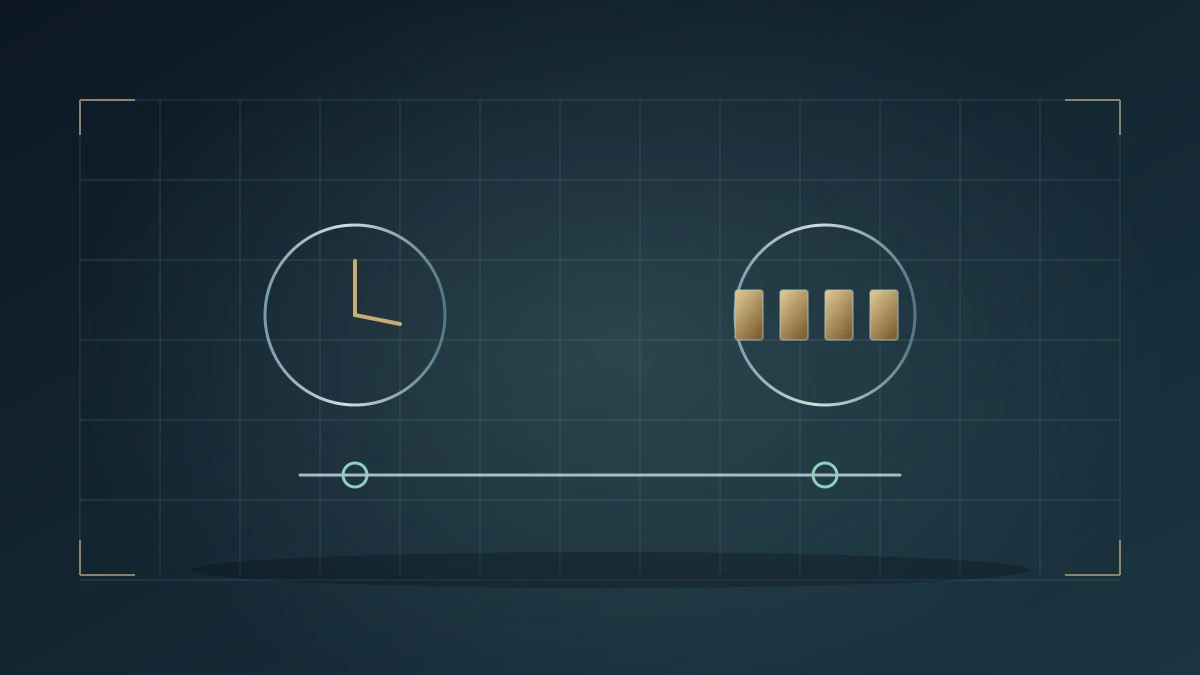
ERC-6372: a contract’s timepoint can count blocks instead of seconds
The proposed clock interface makes timing units discoverable. Governance and delay interfaces need those units before converting a number into a calendar date.
Full analysis selected. Choose Quick brief to read the key points first.
WFN QUICK BRIEF · UNDER 1 MIN
The short version
MODE 2 OF 2
What the primary record establishes
ERC-6372, created on 25 January 2023, is published with Review status. It proposes clock() and CLOCK_MODE() to expose a contract’s non-decreasing timepoint and its mode. Ethereum — ERC-6372, Review; created 25 January 2023 ↗
What the distinction changes
WFN interpretation: the same numerical difference can represent different things under different clocks. A delay of a given number of blocks cannot simply be displayed as that number of seconds.
What to check before drawing a conclusion
For an integration, read the clock mode of the relevant deployment and keep it consistent with any snapshot or deadline being queried. A timestamp from one component should not silently be passed into a block-number query in another.
Quick Brief is a reading aid. The full article and source trail stay on this page.
WFN STORY COMPASS
Choose your reading angle
Switch between the reported record, market context and open questions. Status labels distinguish claims from findings.
All context layers are visible. Choose a lens to jump to that part of the story.
Original WFN vector illustrationWFN · 30 October 2026
Editorial noteSource-based explanation with original WFN analysis. Historical records retain their dates; numerical examples are illustrative. The original vector illustration is conceptual and is not documentary evidence.
WFN REALITY LEDGER
What is on the record?
Primary-source explainer
Primary-source explainer
Primary record / reference periodHistorical proposal; Review status checked 30 October 2026
The linked source supports the documented record; WFN interpretation and illustrative examples are separate.
The proposed clock interface makes timing units discoverable. Governance and delay interfaces need those units before converting a number into a calendar date.
01 · VERIFIED RECORD
What the primary record establishes
ERC-6372, created on 25 January 2023, is published with Review status. It proposes clock() and CLOCK_MODE() to expose a contract’s non-decreasing timepoint and its mode. Ethereum — ERC-6372, Review; created 25 January 2023 ↗
WFN interpretation: the same numerical difference can represent different things under different clocks. A delay of a given number of blocks cannot simply be displayed as that number of seconds.
A calendar estimate based on expected block production is an estimate. Displaying its assumption beside the date helps users understand why a predicted voting deadline can move as the chain progresses.
03 · REVIEW POINTS
What to check before drawing a conclusion
For an integration, read the clock mode of the relevant deployment and keep it consistent with any snapshot or deadline being queried. A timestamp from one component should not silently be passed into a block-number query in another.
Test the boundary at the actual timepoint used by the contract, then show any human-readable estimate separately. This proposal addresses interoperability of clocks; its Review label and the behaviour of the deployed implementation should both remain visible in a technical assessment.