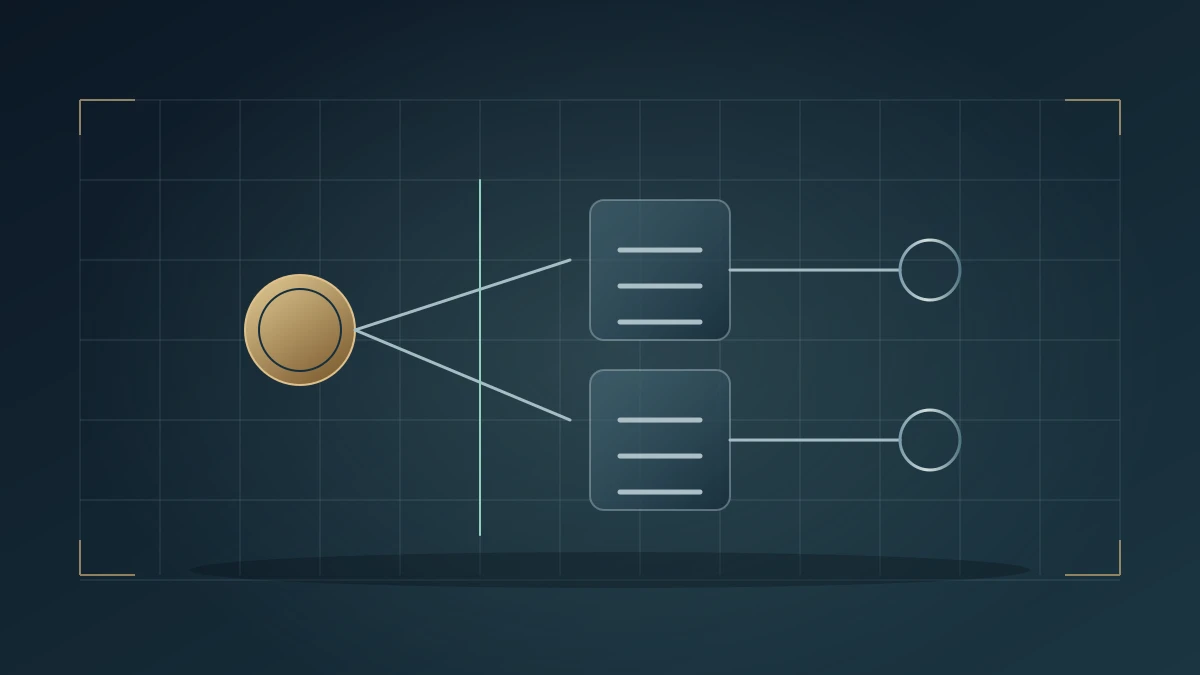
ERC-173: the owner address starts a control review, rather than finishing it
A standard ownership interface makes one role discoverable. Understanding administrative power still requires a map of the particular contract’s permissions.
WFN interpretation: a zero owner is a statement about the role exposed by this interface. A wider conclusion about every administrative route requires evidence about the rest of the system.
What to check before drawing a conclusion
Create a permission map that identifies each sensitive action, its controlling address and any conditions on changing it. Trace contract addresses in the deployed environment rather than relying on a screenshot of one ownership event.
Quick Brief is a reading aid. The full article and source trail stay on this page.
WFN STORY COMPASS
Choose your reading angle
Switch between the reported record, market context and open questions. Status labels distinguish claims from findings.
All context layers are visible. Choose a lens to jump to that part of the story.
Original WFN vector illustrationWFN · 30 October 2026
Editorial noteSource-based explanation with original WFN analysis. Historical records retain their dates; numerical examples are illustrative. The original vector illustration is conceptual and is not documentary evidence.
WFN REALITY LEDGER
What is on the record?
Primary-source explainer
Primary-source explainer
Primary record / reference periodHistorical specification; Final; created 7 June 2018
The linked source supports the documented record; WFN interpretation and illustrative examples are separate.
A standard ownership interface makes one role discoverable. Understanding administrative power still requires a map of the particular contract’s permissions.
Its specification allows renouncing that ownership by transferring it to the zero address. It also expressly permits other ownership schemes to coexist in the same contract. Ethereum — ERC-173, Final; created 7 June 2018 ↗
02 · WFN EDITORIAL ANALYSIS
What the distinction changes
WFN interpretation: a zero owner is a statement about the role exposed by this interface. A wider conclusion about every administrative route requires evidence about the rest of the system.
For example, an application may comprise several contracts with separate responsibilities. A review that reads one owner field and stops can overlook how those components interact or which other permissions influence user operations.
03 · REVIEW POINTS
What to check before drawing a conclusion
Create a permission map that identifies each sensitive action, its controlling address and any conditions on changing it. Trace contract addresses in the deployed environment rather than relying on a screenshot of one ownership event.
Also distinguish current state from historical transitions: an old event identifies a past change, while a current read establishes the value at the chosen block. ERC-173 supplies useful structure for that investigation without certifying the project’s security or governance quality.