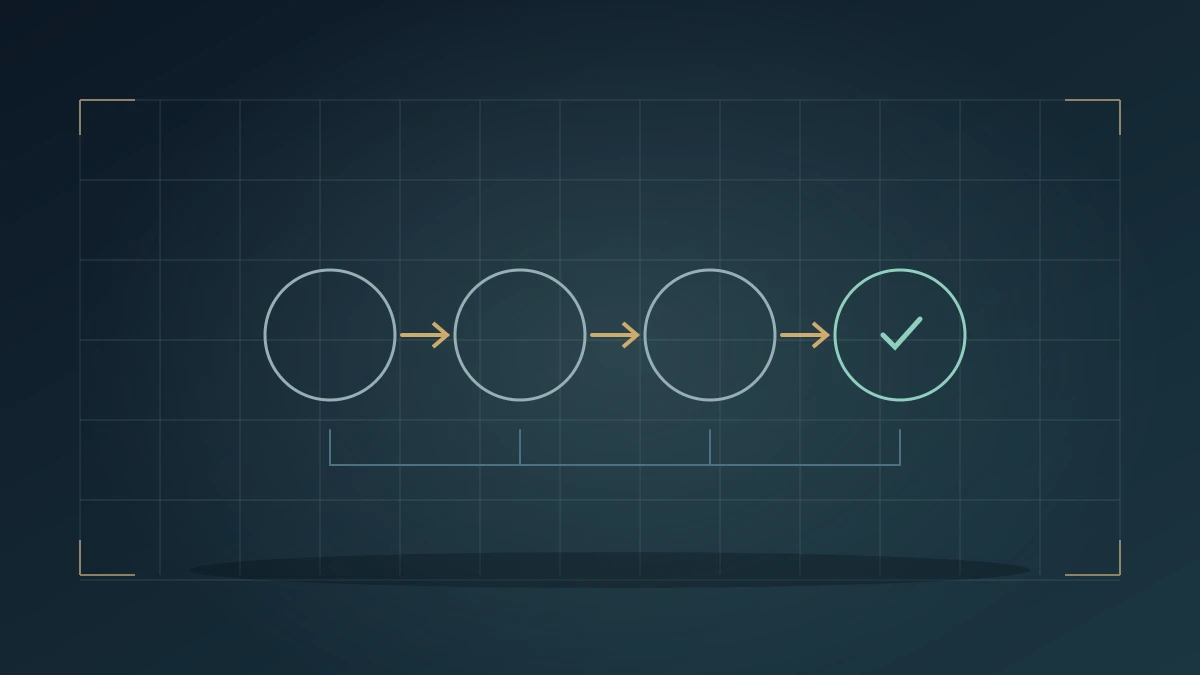
Account abstraction introduces a separate operation and bundling workflow. A service acknowledgement should not be presented as a confirmed transaction result.
What the primary record establishes
ERC-4337 defines UserOperations processed through higher-layer infrastructure and an EntryPoint contract. Bundlers assemble operations into an on-chain transaction. Optional paymasters can participate in paying the associated costs under the defined validation rules. Ethereum ERC-4337 — Account Abstraction Using Alt Mempool ↗
The specification distinguishes receiving an operation, simulating validation and inclusion. It describes dropping operations when validation fails or validity windows are unsuitable, and notes that validation can depend on EVM state. A simulated result is not the final execution record. Ethereum ERC-4337 — Account Abstraction Using Alt Mempool ↗
What the distinction changes
For a payment integration, a returned operation identifier is useful for tracking an instruction. It does not, by itself, establish that the intended recipient has received funds. The application needs to reconcile the operation with its actual inclusion and execution evidence.
A sponsored experience also changes who initially funds a cost, not whether computation and settlement have a cost. The customer-facing claim should state the applicable service terms rather than equate the presence of a paymaster with unlimited free execution.
What to check before drawing a conclusion
Keep submitted, accepted, included and executed states distinct. Record the network, relevant EntryPoint version, operation identifier and any linked transaction receipt. Verify the account-level outcome, including the intended transfer, rather than stopping at a successful outer bundle.
WFN infers that account-abstraction interfaces need a richer status model than a single sent badge. This is an interpretation of the specification’s workflow, not a claim about every bundler’s service commitments or a guarantee that a submitted operation will be included.