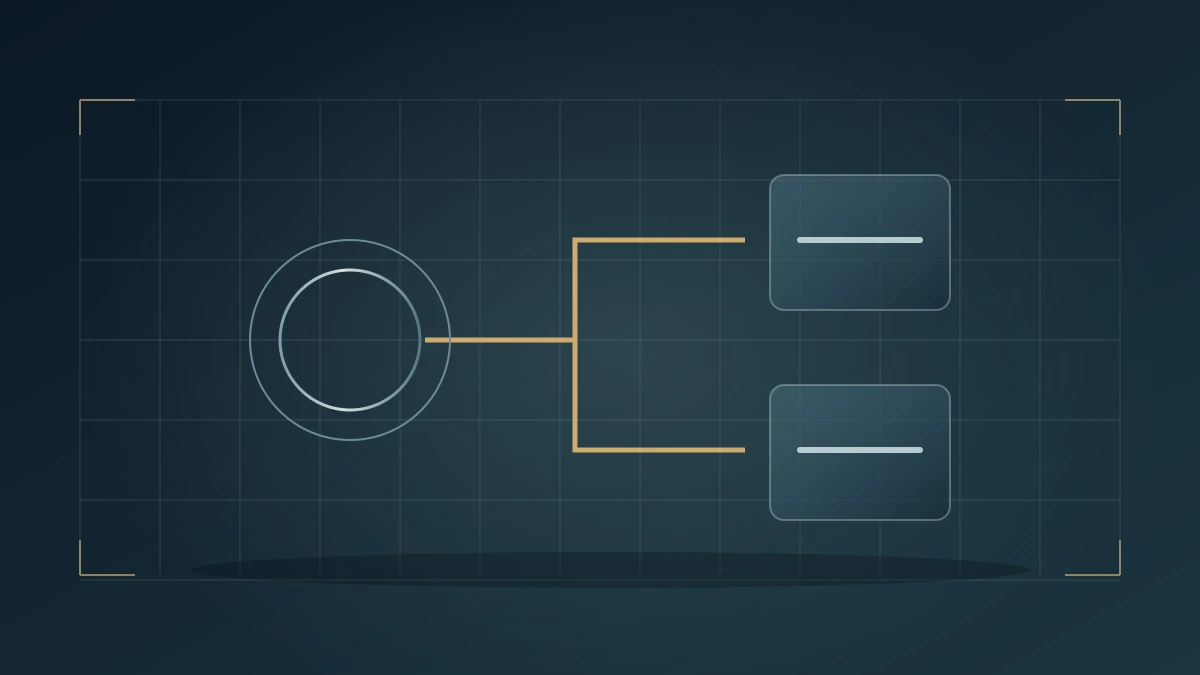
An unchanged proxy address can point to changed contract logic
ERC-1967 standardises where proxy information is stored. A familiar account address is insufficient to establish which implementation currently handles its calls.
Full analysis selected. Choose Quick brief to read the key points first.
WFN QUICK BRIEF · UNDER 1 MIN
The short version
MODE 2 OF 2
What the primary record establishes
ERC-1967 has Final status and defines distinguished storage slots for a proxy’s implementation, beacon and optional administrator information. The standard helps tools discover the logic behind a proxy without adding potentially conflicting public methods. ERC-1967 — Proxy Storage Slots, Final specification ↗
What the distinction changes
The consequence for WFN’s readers is temporal: an unchanged proxy address does not by itself prove unchanged behaviour. A review made before an upgrade concerns a particular implementation and state.
What to check before drawing a conclusion
For a verification record, retain the proxy address, chain, block reference and implementation or beacon resolution. If comparing two reviews, check whether they refer to the same underlying code.
Quick Brief is a reading aid. The full article and source trail stay on this page.
WFN STORY COMPASS
Choose your reading angle
Switch between the reported record, market context and open questions. Status labels distinguish claims from findings.
All context layers are visible. Choose a lens to jump to that part of the story.
Original WFN vector illustrationWFN · 22 October 2026
Editorial noteSource-based explanation with original WFN analysis. Historical records retain their dates; numerical examples are illustrative. The original vector illustration is conceptual and is not documentary evidence.
WFN REALITY LEDGER
What is on the record?
Primary-source explainer
Primary-source explainer
Primary record / reference periodFinal specification checked 22 October 2026; existing standard, not a newly announced upgrade
The linked source supports the documented record; WFN interpretation and illustrative examples are separate.
ERC-1967 standardises where proxy information is stored. A familiar account address is insufficient to establish which implementation currently handles its calls.
01 · VERIFIED RECORD
What the primary record establishes
ERC-1967 has Final status and defines distinguished storage slots for a proxy’s implementation, beacon and optional administrator information. The standard helps tools discover the logic behind a proxy without adding potentially conflicting public methods. ERC-1967 — Proxy Storage Slots, Final specification ↗
For a beacon proxy, the client reads the beacon slot and obtains the implementation from the beacon. The specification recommends corresponding events when relevant slots change, including initialisation. A directly stored implementation and a beacon are distinct discovery paths. ERC-1967 — Proxy Storage Slots, Final specification ↗
02 · WFN EDITORIAL ANALYSIS
What the distinction changes
The consequence for WFN’s readers is temporal: an unchanged proxy address does not by itself prove unchanged behaviour. A review made before an upgrade concerns a particular implementation and state.
A visible upgrade event can support monitoring, but an event label alone is not an audit of the new code or its permissions. The implementation, upgrade authority and actual network need to be identified together.
03 · REVIEW POINTS
What to check before drawing a conclusion
For a verification record, retain the proxy address, chain, block reference and implementation or beacon resolution. If comparing two reviews, check whether they refer to the same underlying code.
This explainer describes standardised discovery rather than asserting that every proxy is upgradeable in the same way. It does not certify a token or protocol; implementation-specific evidence is needed to assess the consequences of a particular change.