Blockchain can authenticate a statistics release without proving its economic accuracy
A BIS-hosted prototype binds statistical datasets to a publisher and an anchored fingerprint. The integrity check and the quality of the original measurement remain different questions.
Full analysis selected. Choose Quick brief to read the key points first.
WFN QUICK BRIEF · UNDER 1 MIN
The short version
MODE 2 OF 2
What the primary record establishes
Working Paper 1374, dated September 2026, presents a proof of concept for verifying official statistics. It combines SDMx data, hashing, Merkle aggregation and a publisher identity credential, with a reference implementation on the XRP Ledger. BIS Working Paper 1374 — Verifiable official statistics, September 2026 ↗
What the distinction changes
WFN separates integrity from accuracy. Showing that a file has not changed since publication does not establish that its survey, classification or economic estimate was correct in the first place.
What to check before drawing a conclusion
Keep the publisher identity, release version, verification result and dataset together. An authentic revision should be distinguishable from an unauthorised modification; immutability does not mean statistics can never be revised.
Quick Brief is a reading aid. The full article and source trail stay on this page.
WFN STORY COMPASS
Choose your reading angle
Switch between the reported record, market context and open questions. Status labels distinguish claims from findings.
All context layers are visible. Choose a lens to jump to that part of the story.
Original WFN vector illustrationWFN · 22 October 2026
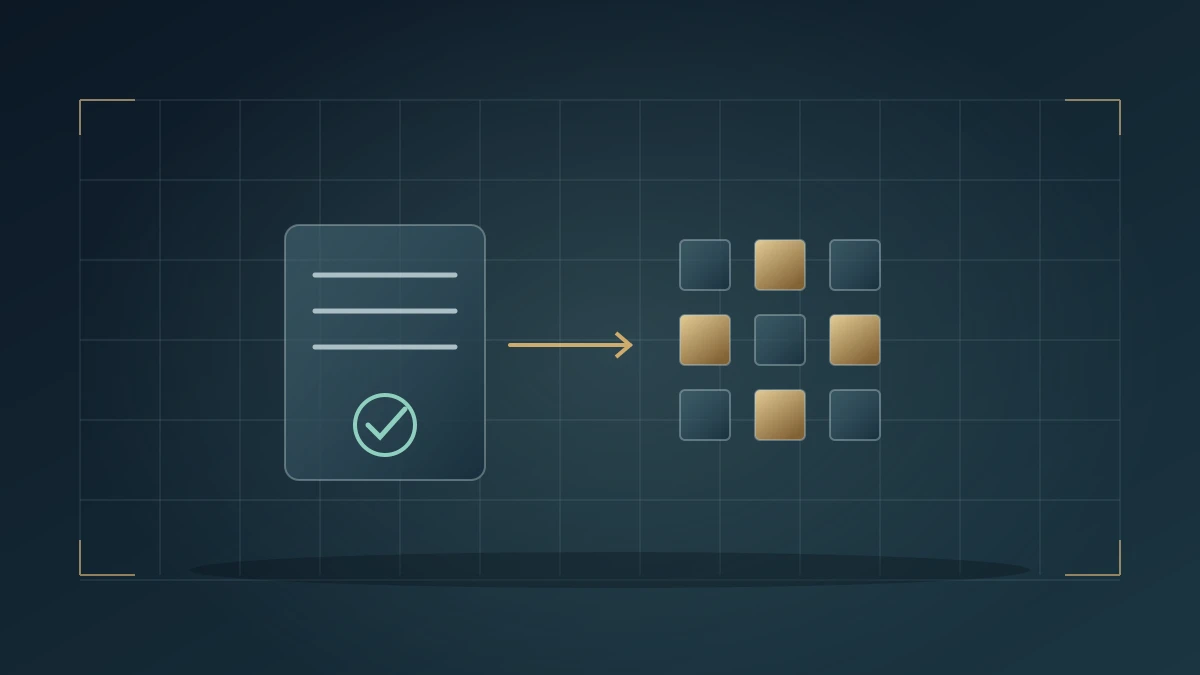
Editorial noteSource-based explanation with original WFN analysis. Historical records retain their dates; numerical examples are illustrative. The original vector illustration is conceptual and is not documentary evidence.
WFN REALITY LEDGER
What is on the record?
Primary-source explainer
Primary-source explainer
Primary record / reference periodSeptember 2026 research proof of concept; checked 22 October, not a deployment announcement
The linked source supports the documented record; WFN interpretation and illustrative examples are separate.
A BIS-hosted prototype binds statistical datasets to a publisher and an anchored fingerprint. The integrity check and the quality of the original measurement remain different questions.
01 · VERIFIED RECORD
What the primary record establishes
Working Paper 1374, dated September 2026, presents a proof of concept for verifying official statistics. It combines SDMx data, hashing, Merkle aggregation and a publisher identity credential, with a reference implementation on the XRP Ledger. BIS Working Paper 1374 — Verifiable official statistics, September 2026 ↗
The paper describes a consumer checking publisher identity and whether a file matches the anchored version. It also identifies off-chain data availability as an operational requirement. A ledger commitment does not itself supply the underlying dataset. BIS Working Paper 1374 — Verifiable official statistics, September 2026 ↗
02 · WFN EDITORIAL ANALYSIS
What the distinction changes
WFN separates integrity from accuracy. Showing that a file has not changed since publication does not establish that its survey, classification or economic estimate was correct in the first place.
Version authentication can nevertheless improve an audit trail. Analysts could identify exactly which release entered a model instead of relying on a webpage that later changes, provided the original data remain accessible.
03 · REVIEW POINTS
What to check before drawing a conclusion
Keep the publisher identity, release version, verification result and dataset together. An authentic revision should be distinguishable from an unauthorised modification; immutability does not mean statistics can never be revised.
This is research about data verification, rather than evidence that every statistical agency has adopted the prototype. WFN does not treat its use of a ledger as an investment endorsement or claim that cryptography removes the need for statistical governance.