ERC-6909: a per-token allowance and a global operator grant different scope
One contract can manage several token IDs. Permission screens must show whether approval covers a quantity of one ID or the operator role across the contract.
Full analysis selected. Choose Quick brief to read the key points first.
WFN QUICK BRIEF · UNDER 1 MIN
The short version
MODE 2 OF 2
What the primary record establishes
ERC-6909, created on 19 April 2023 and published as Final, defines a minimal multi-token interface with allowances by token ID and an operator mechanism. Ethereum — ERC-6909, Final; created 19 April 2023 ↗
What the distinction changes
WFN example: permission to spend a stated quantity of token A is different from granting an application the operator role over the contract’s token collection.
What to check before drawing a conclusion
When reviewing a transfer, inspect both permission routes. Seeing a zero allowance for one ID does not answer whether the caller already has a separate operator permission.
Quick Brief is a reading aid. The full article and source trail stay on this page.
WFN STORY COMPASS
Choose your reading angle
Switch between the reported record, market context and open questions. Status labels distinguish claims from findings.
All context layers are visible. Choose a lens to jump to that part of the story.
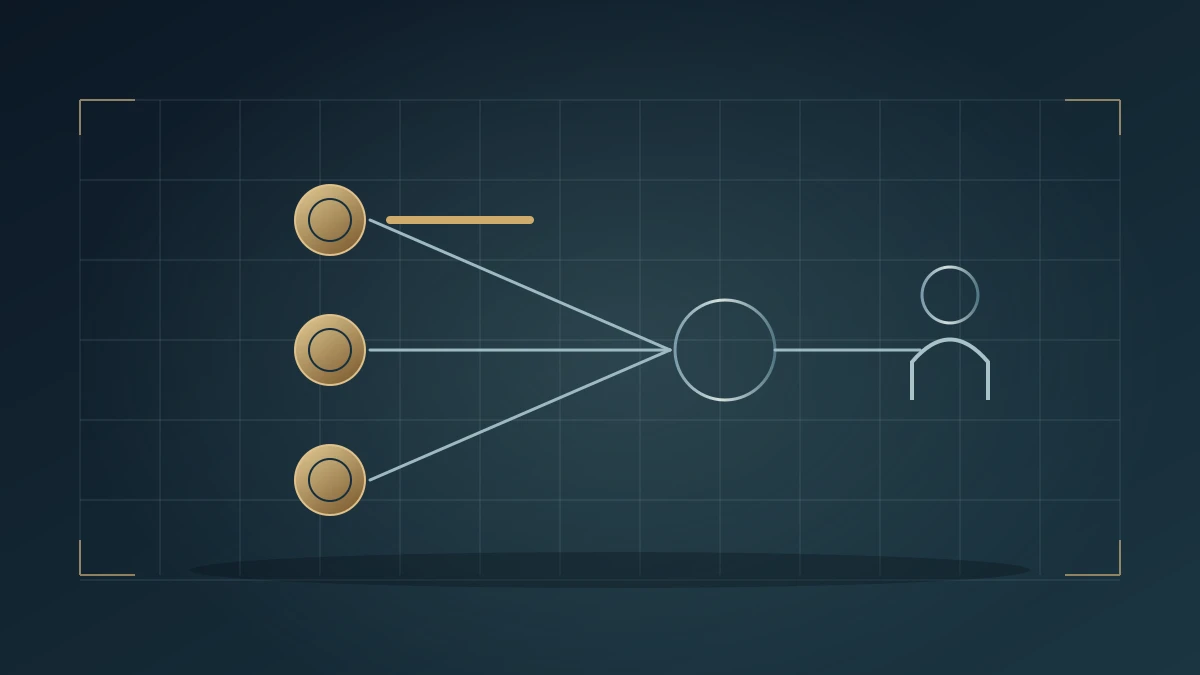
Original WFN vector illustrationWFN · 2 November 2026
Editorial noteSource-based explanation with original WFN analysis. Historical records retain their dates; numerical examples are illustrative. The original vector illustration is conceptual and is not documentary evidence.
WFN REALITY LEDGER
What is on the record?
Primary-source explainer
Primary-source explainer
Primary record / reference periodHistorical specification; Final; created 19 April 2023
The linked source supports the documented record; WFN interpretation and illustrative examples are separate.
One contract can manage several token IDs. Permission screens must show whether approval covers a quantity of one ID or the operator role across the contract.
01 · VERIFIED RECORD
What the primary record establishes
ERC-6909, created on 19 April 2023 and published as Final, defines a minimal multi-token interface with allowances by token ID and an operator mechanism. Ethereum — ERC-6909, Final; created 19 April 2023 ↗
An operator has authority across token IDs; an allowance specifies an amount for an individual ID. Required recipient callbacks and batching are omitted from the minimal interface. Ethereum — ERC-6909, Final; created 19 April 2023 ↗
02 · WFN EDITORIAL ANALYSIS
What the distinction changes
WFN example: permission to spend a stated quantity of token A is different from granting an application the operator role over the contract’s token collection.
A wallet displaying only approved can hide that difference. Its confirmation should identify the contract, permission type and applicable ID or scope so that the user can evaluate the actual request.
03 · REVIEW POINTS
What to check before drawing a conclusion
When reviewing a transfer, inspect both permission routes. Seeing a zero allowance for one ID does not answer whether the caller already has a separate operator permission.
Check the deployed implementation and any extensions rather than assuming the complete behaviour of another multi-token standard. The interface’s minimal design explains compatibility expectations; it does not establish the economic quality or authenticity of every token it manages.