Full analysis selected. Choose Quick brief to read the key points first.
WFN QUICK BRIEF · UNDER 1 MIN
The short version
MODE 2 OF 2
What the primary record establishes
ERC-3009, created on 28 September 2020, is labelled Draft in the official EIP repository. It describes signed authorizations for fungible-token transfers and uses random 32-byte nonces, unlike the sequential nonce approach discussed for ERC-2612. Ethereum EIPs — ERC-3009: Transfer With Authorization, Draft ↗
What the distinction changes
The practical distinction is scope. A transfer authorization describes a particular movement with stated conditions. An allowance belongs to a different authorization pattern, where a spender can draw within the approved limit.
What to check before drawing a conclusion
WFN’s review points are the token contract, destination, amount, time window, nonce state and signing domain. A familiar token symbol is not enough to identify the contract the user is authorizing.
Quick Brief is a reading aid. The full article and source trail stay on this page.
WFN STORY COMPASS
Choose your reading angle
Switch between the reported record, market context and open questions. Status labels distinguish claims from findings.
All context layers are visible. Choose a lens to jump to that part of the story.
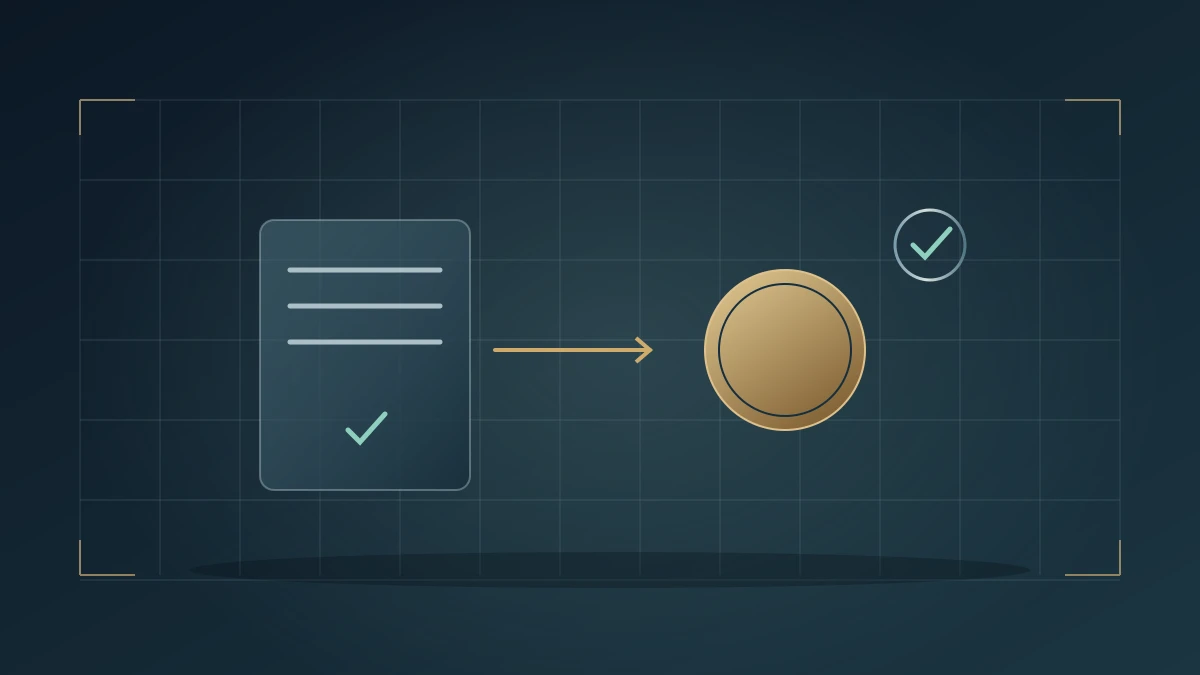
Original WFN vector illustrationWFN · 23 October 2026
Editorial noteSource-based explanation with original WFN analysis. Historical records retain their dates; numerical examples are illustrative. The original vector illustration is conceptual and is not documentary evidence.
WFN REALITY LEDGER
What is on the record?
Primary-source explainer
Primary-source explainer
Primary record / reference periodERC-3009, created 28 September 2020; Draft status checked 23 October 2026
The linked source supports the documented record; WFN interpretation and illustrative examples are separate.
The Draft proposal combines a recipient, amount, validity window and random nonce. A signature and a completed transfer remain different records.
01 · VERIFIED RECORD
What the primary record establishes
ERC-3009, created on 28 September 2020, is labelled Draft in the official EIP repository. It describes signed authorizations for fungible-token transfers and uses random 32-byte nonces, unlike the sequential nonce approach discussed for ERC-2612. Ethereum EIPs — ERC-3009: Transfer With Authorization, Draft ↗
An authorization specifies the sender, recipient, value, validAfter, validBefore and nonce. The receiveWithAuthorization variant requires the caller to be the payee, a restriction relevant when a transfer is combined with another action. Ethereum EIPs — ERC-3009: Transfer With Authorization, Draft ↗
02 · WFN EDITORIAL ANALYSIS
What the distinction changes
The practical distinction is scope. A transfer authorization describes a particular movement with stated conditions. An allowance belongs to a different authorization pattern, where a spender can draw within the approved limit.
A wallet displaying “signed” has therefore not necessarily shown an executed transfer. Submission, contract checks and inclusion still matter. An unused signature and an on-chain balance change should not share one undifferentiated status.
03 · REVIEW POINTS
What to check before drawing a conclusion
WFN’s review points are the token contract, destination, amount, time window, nonce state and signing domain. A familiar token symbol is not enough to identify the contract the user is authorizing.
The proposal’s status should be stated accurately, and support checked for the particular implementation. ERC-3009 is neither a newly launched 2026 network feature nor a guarantee that every ERC-20 token accepts this authorization format.