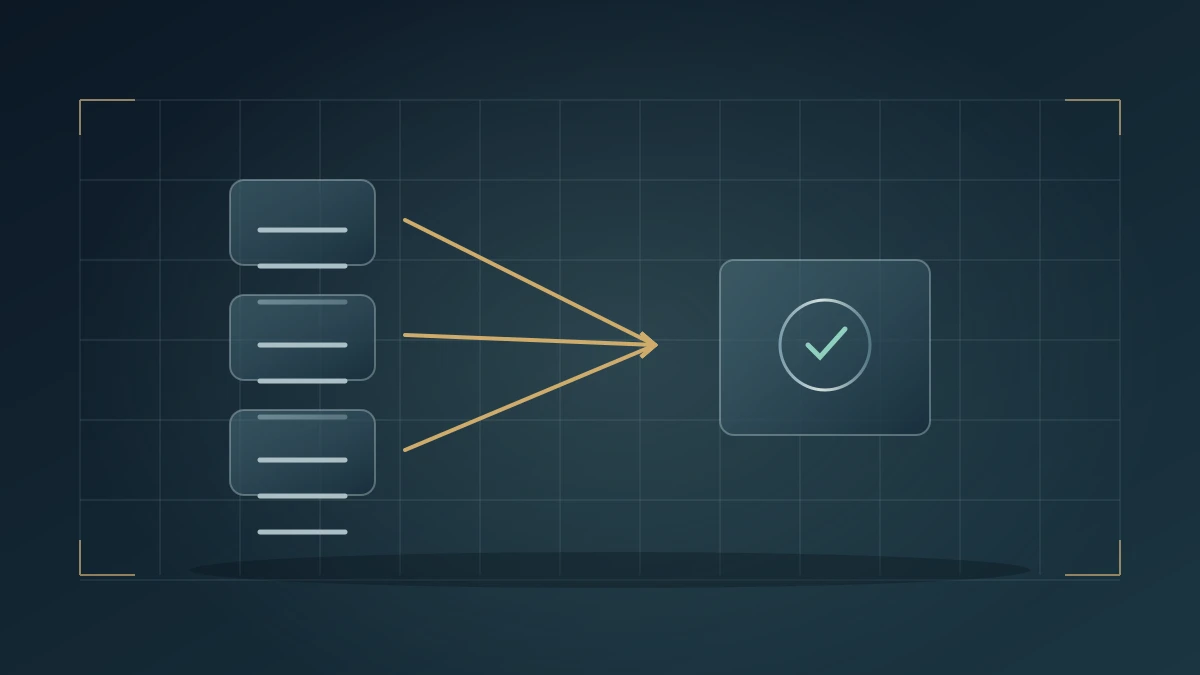
EIP-1898 uses a block hash to keep related Ethereum state reads consistent
A balance and a contract call can describe different states if a reorganisation happens between requests. An explicit block hash identifies the intended state.
The underlying reporting problem is coherence. Two requests for “latest” need not describe the same block. A wallet can otherwise combine a sender balance from one state with a recipient balance from another.
What to check before drawing a conclusion
WFN would record the hash, requested canonicality and node responses with the resulting display. An unavailable historical state and a noncanonical block should remain distinguishable errors, rather than being replaced silently with current data.
Quick Brief is a reading aid. The full article and source trail stay on this page.
WFN STORY COMPASS
Choose your reading angle
Switch between the reported record, market context and open questions. Status labels distinguish claims from findings.
All context layers are visible. Choose a lens to jump to that part of the story.
Original WFN vector illustrationWFN · 23 October 2026
Editorial noteSource-based explanation with original WFN analysis. Historical records retain their dates; numerical examples are illustrative. The original vector illustration is conceptual and is not documentary evidence.
WFN REALITY LEDGER
What is on the record?
Primary-source explainer
Primary-source explainer
Primary record / reference periodEIP-1898, created 1 April 2019; Final status checked 23 October 2026
The linked source supports the documented record; WFN interpretation and illustrative examples are separate.
A balance and a contract call can describe different states if a reorganisation happens between requests. An explicit block hash identifies the intended state.
With blockHash, requireCanonical defaults to false. When set to true, it asks the node to reject a block outside its canonical chain; the specification distinguishes that case from a block the node cannot find. Ethereum EIPs — EIP-1898: blockHash in defaultBlock methods, Final ↗
02 · WFN EDITORIAL ANALYSIS
What the distinction changes
The underlying reporting problem is coherence. Two requests for “latest” need not describe the same block. A wallet can otherwise combine a sender balance from one state with a recipient balance from another.
Pinning related reads to one hash identifies a common state even when a height alone could refer to a different block after a reorganisation. That improves the meaning of a snapshot without promising that the block will remain canonical forever.
03 · REVIEW POINTS
What to check before drawing a conclusion
WFN would record the hash, requested canonicality and node responses with the resulting display. An unavailable historical state and a noncanonical block should remain distinguishable errors, rather than being replaced silently with current data.
Check the particular provider’s support and available state history. A Final interface specification is not evidence that every endpoint implements every option or retains all old states. Consistency, availability and finality are separate questions.