




Ringgit, Rupiah, Baht: How Payment Gateway Providers Help Brokers Dominate Southeast Asia
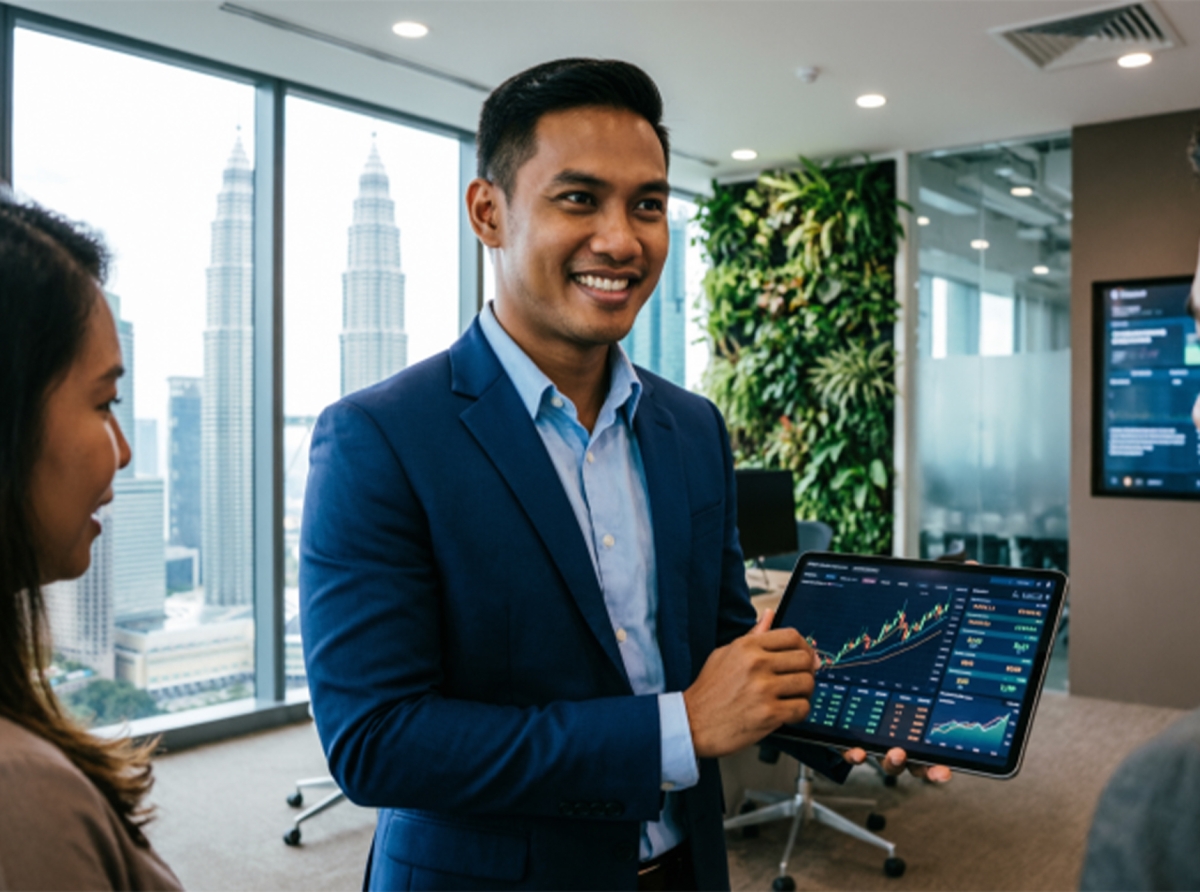
Ringgit, Rupiah, Baht: How Payment Gateway Providers Help Brokers Dominate Southeast Asia
In financial services, technology often receives the spotlight. Trading platforms, artificial intelligence, analytics, and mobile applications dominate industry discussions. Yet across Southeast Asia, one of the most decisive factors behind brokerage growth is far less glamorous: payments. As competition intensifies across Malaysia, Indonesia, Thailand, and neighboring markets, brokers are discovering that success often depends not on attracting clients, but on making it effortless for those clients to move money.
In 2026, Payment Gateway Providers have become a strategic weapon in the battle for Southeast Asia's rapidly expanding financial market.
In 2026, Payment Gateway Providers have become a strategic weapon in the battle for Southeast Asia's rapidly expanding financial market.
The Real Barrier Is No Longer Market Access
For years, financial companies focused on expanding access to global markets.That challenge has largely been solved. A trader in Kuala Lumpur, Jakarta, or Bangkok can open an account and access international markets within minutes.
The real competition now begins after registration.
Can clients fund their accounts quickly?
Can they use familiar local payment methods?
Can withdrawals arrive without delays or unexpected complications?
The answers increasingly determine which brokers grow and which struggle to retain customers. Across Southeast Asia, convenience has become a competitive advantage.
Why Local Payments Matter More Than Global Brands
Many international financial firms initially approached Southeast Asia with a standardized strategy. The assumption was simple: a globally recognized brand and an international payment system would be sufficient.The market proved otherwise. Consumers across the region often prefer payment methods deeply integrated into local banking ecosystems.
A trader in Malaysia thinks in ringgit. A client in Indonesia operates in rupiah. An investor in Thailand manages finances in baht.
The easier a broker makes these transactions, the lower the friction between intention and action.
In highly competitive industries, reducing friction frequently generates stronger growth than adding new features.
Southeast Asia Has Become a Fintech Powerhouse
The region's digital transformation has accelerated dramatically during the past decade.Mobile banking adoption has surged.
Real-time payment networks have expanded.
Digital wallets have become mainstream.
Governments across the region have invested heavily in financial infrastructure designed to support cashless economies.
As a result, consumer expectations have changed.
Users increasingly expect financial transactions to occur instantly and seamlessly.
Brokerages that fail to meet these expectations risk appearing outdated regardless of the quality of their trading services.
Payment experience is rapidly becoming part of the overall customer experience.

Ringgit, Rupiah, Baht: How Payment Gateway Providers Help Brokers Dominate Southeast Asia
The Economics of Faster Money Movement
The importance of payment infrastructure extends beyond convenience.It directly affects business performance. When deposits are processed quickly and withdrawals remain reliable, customer engagement typically increases.
Clients are more likely to remain active, fund larger balances, and maintain longer relationships with financial providers.
This creates a powerful economic incentive for brokers.
Investment in local payment infrastructure often produces measurable returns through improved client retention and higher transaction volumes.
In many cases, payment efficiency becomes one of the most profitable investments a brokerage can make.
Payment Gateways Are Becoming Growth Engines
Historically, payment providers operated behind the scenes.Today, they play a far more strategic role.
Modern Payment Gateway Providers are helping brokers navigate local regulations, integrate regional payment methods, support multiple currencies, and reduce operational complexity.
The relationship increasingly resembles a partnership rather than a simple service arrangement.
As Southeast Asia becomes more interconnected, payment providers are positioning themselves as essential infrastructure for financial expansion.
Their influence continues to grow as brokers seek access to increasingly fragmented and diverse markets.
What This Means for the Financial Industry
The rise of localized payment ecosystems reflects a broader trend shaping global finance.Financial services are becoming more regional rather than purely global.
Companies that understand local consumer behavior are often outperforming larger competitors that rely exclusively on standardized international solutions.
This shift is creating opportunities throughout the fintech sector.
Payment providers, compliance firms, digital-wallet operators, and banking-technology companies are all benefiting from growing demand for localized financial infrastructure.
The trend is attracting increasing investment as Southeast Asia continues to establish itself as one of the world's most dynamic financial regions.
The Future Will Be Won Through Convenience
The next stage of competition may not revolve around who offers the most sophisticated platform.It may depend on who creates the smoothest financial journey.
As digital finance matures, users increasingly expect invisible infrastructure.
They do not want to think about deposits, currency conversion, transfers, or withdrawals.
They simply expect them to work. Companies that deliver that experience consistently will enjoy a significant competitive advantage.
For brokers operating in Southeast Asia, payment infrastructure is no longer a back-office function. It is becoming a central element of business strategy.
The rapid growth of Southeast Asia's financial markets is transforming payment technology from a supporting service into a critical growth driver.
Brokers that successfully integrate local payment ecosystems gain access to stronger customer engagement, higher retention rates, and faster regional expansion.
As Malaysia, Indonesia, Thailand, and neighboring economies continue their digital transformation, Payment Gateway Providers are becoming some of the most influential players in the financial ecosystem.
The brokers that dominate the next decade may not necessarily have the largest marketing budgets or the most advanced platforms.
They may simply be the ones that make moving money easier than everyone else.
Brokers that successfully integrate local payment ecosystems gain access to stronger customer engagement, higher retention rates, and faster regional expansion.
As Malaysia, Indonesia, Thailand, and neighboring economies continue their digital transformation, Payment Gateway Providers are becoming some of the most influential players in the financial ecosystem.
The brokers that dominate the next decade may not necessarily have the largest marketing budgets or the most advanced platforms.
They may simply be the ones that make moving money easier than everyone else.
By Miles Harrington
June 18, 2026
Join us. Our Telegram: @forexturnkey
All to the point, no ads. A channel that doesn't tire you out, but pumps you up.
June 18, 2026
Join us. Our Telegram: @forexturnkey
All to the point, no ads. A channel that doesn't tire you out, but pumps you up.




Report
My comments