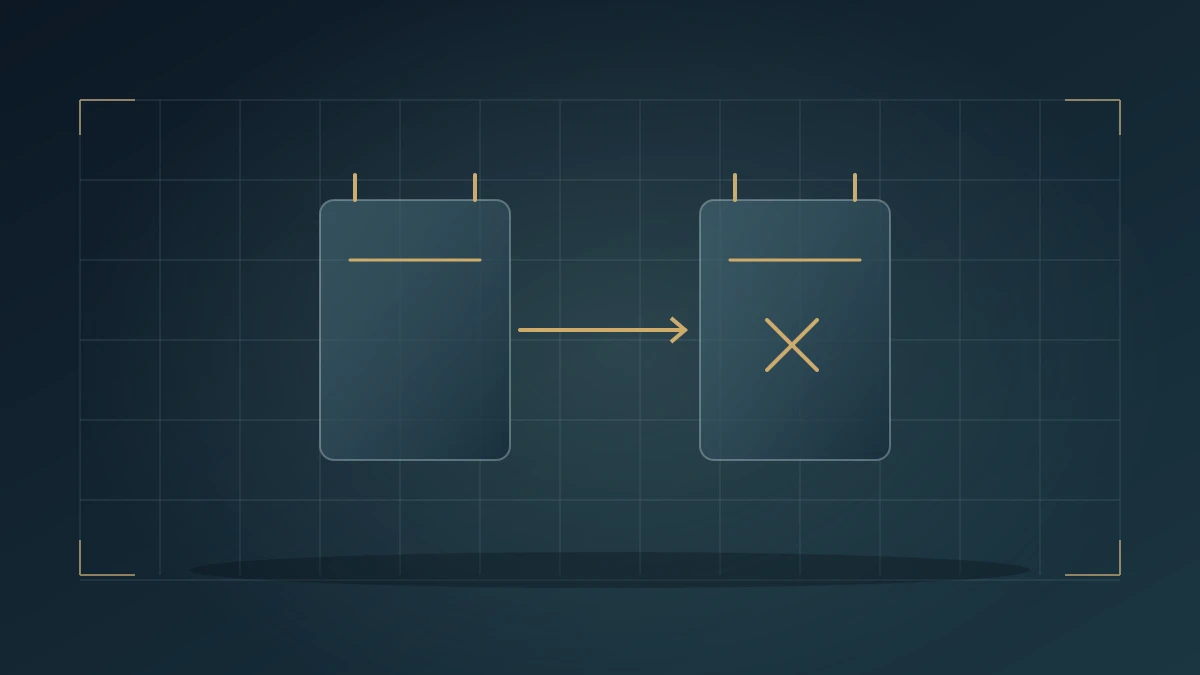
A trading day and a euro settlement day can be different dates
The ECB’s T2 calendar describes access to central-bank-money settlement. A live currency quote does not prove that the payment leg can settle that day.
Full analysis is selected. Choose Quick brief to scan the key points first.
WFN QUICK BRIEF · UNDER 1 MIN
The short version
MODE 2 OF 2
What the primary record establishes
The ECB describes T2 as the Eurosystem’s real-time gross settlement system. It settles individual payment orders in central bank money. Its euro calendar excludes weekends and six named holidays, including Good Friday, Easter Monday and 1 May. ECB — What is T2? ↗
What the distinction changes
For an FX operation, an available price, an accepted trade and a completed payment are separate records. An electronic market may display quotes while a particular settlement route is closed. The quote therefore cannot serve as proof that cash arrived.
What to check before drawing a conclusion
Check both currency calendars, the contract’s value date, relevant cutoffs and any correspondent-bank requirements. Keep trade date and settlement date in separate fields. Avoid replacing a contract’s date rule with an assumption that every weekday is a euro settlement day.
Quick Brief is a reading aid. The full article and source trail stay on this page.
WFN STORY COMPASS
Choose your reading angle
Move between the reported record, market context and open questions. Status labels keep claims distinct from findings.
All context layers are visible. Choose a lens to jump to that part of the story.
Original WFN vector illustrationWFN · 18 October 2026
Editorial noteSource-based explanation with original WFN analysis. Historical records retain their dates; numerical examples are illustrative. The original vector illustration is conceptual and is not documentary evidence.
WFN REALITY LEDGER
What is on the record?
Primary-source explainer
Primary-source explainer
Primary record / reference periodECB T2 operating-calendar description checked 18 October 2026
The linked source supports the documented record; WFN interpretation and illustrative examples are separate.
The ECB’s T2 calendar describes access to central-bank-money settlement. A live currency quote does not prove that the payment leg can settle that day.
01 · VERIFIED RECORD
What the primary record establishes
The ECB describes T2 as the Eurosystem’s real-time gross settlement system. It settles individual payment orders in central bank money. Its euro calendar excludes weekends and six named holidays, including Good Friday, Easter Monday and 1 May. ECB — What is T2? ↗
The same ECB page distinguishes T2 from other TARGET Services, including TIPS and T2S, and links the operating schedule. A rule for one service or settlement currency should not be silently applied to every payment rail. ECB — What is T2? ↗
02 · WFN EDITORIAL ANALYSIS
What the distinction changes
For an FX operation, an available price, an accepted trade and a completed payment are separate records. An electronic market may display quotes while a particular settlement route is closed. The quote therefore cannot serve as proof that cash arrived.
An illustrative agreement to pay euros on a holiday raises a contractual-calendar question before it raises a market-direction question. The answer depends on the agreed business-day convention and payment route. It is not determined merely by the fact that a counterparty’s local office is open.
03 · REVIEW POINTS
What to check before drawing a conclusion
Check both currency calendars, the contract’s value date, relevant cutoffs and any correspondent-bank requirements. Keep trade date and settlement date in separate fields. Avoid replacing a contract’s date rule with an assumption that every weekday is a euro settlement day.
When a payment appears late, reconcile the instruction, route and operating window before attributing it to market stress. This article explains calendar distinctions; it does not predict an outage or assert that every euro payment must pass directly through T2.