Full analysis selected. Choose Quick brief to read the key points first.
WFN QUICK BRIEF · UNDER 1 MIN
The short version
MODE 2 OF 2
Start with the dated table
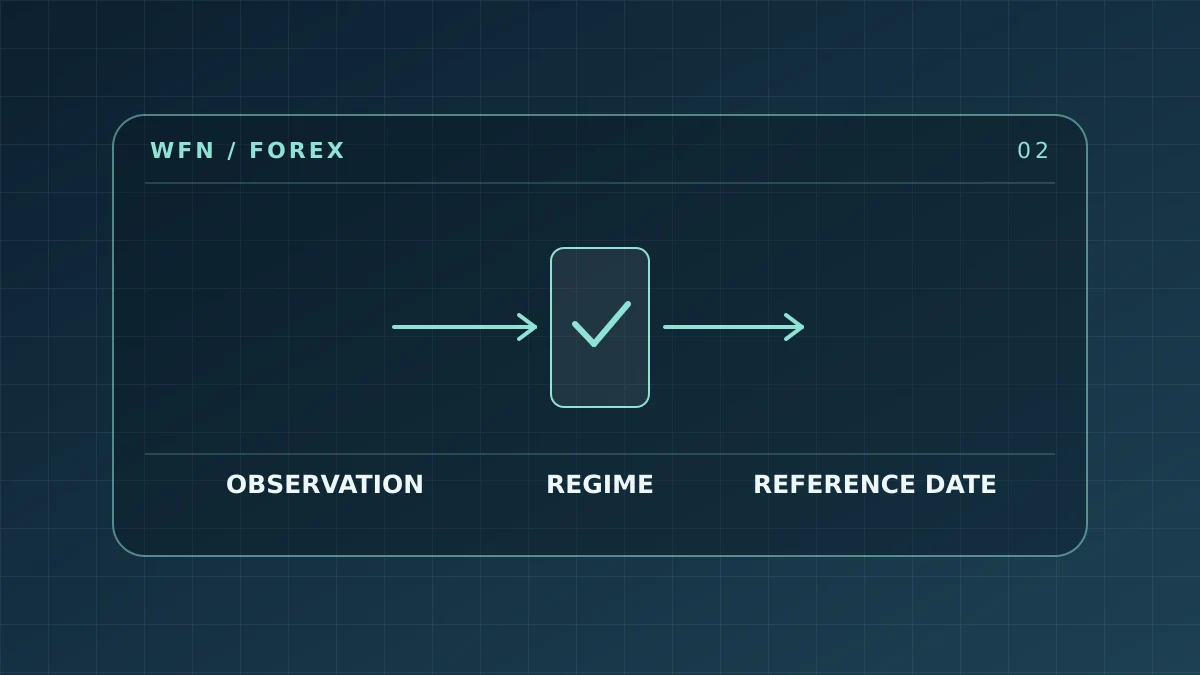
The IMF’s AREAER classification describes how exchange rates have operated in practice. Its categories include stabilized and crawl-like arrangements alongside floating and other regimes. The annual report table is a dated assessment. It is useful to record the observation date as carefully as the category name. IMF · De facto exchange rate arrangements, table II.9 ↗
Keep classification and mandate separate
A narrow range can reflect official operations, market conditions or both. A central bank’s published policy framework answers a different question from the classification of observed exchange behavior. For example, an analyst might record an inflation-targeting framework in one column and a floating arrangement in another. The regime label does not specify where the bank will intervene tomorrow.
Compare like with like
Build a small table with the dated IMF classification, the official framework, the observed exchange rate and any separately documented interventions. If the category changes between editions, check the reference periods and the central bank’s own releases before attributing the shift to a policy decision.
Quick Brief is a reading aid. The full article and source trail stay on this page.
01 · VERIFIED RECORD
Start with the dated table
The IMF’s AREAER classification describes how exchange rates have operated in practice. Its categories include stabilized and crawl-like arrangements alongside floating and other regimes. The annual report table is a dated assessment. It is useful to record the observation date as carefully as the category name. IMF · De facto exchange rate arrangements, table II.9 ↗
02 · WFN EDITORIAL ANALYSIS
Keep classification and mandate separate
A narrow range can reflect official operations, market conditions or both. A central bank’s published policy framework answers a different question from the classification of observed exchange behavior. For example, an analyst might record an inflation-targeting framework in one column and a floating arrangement in another. The regime label does not specify where the bank will intervene tomorrow.
03 · REVIEW POINTS
Compare like with like
Build a small table with the dated IMF classification, the official framework, the observed exchange rate and any separately documented interventions. If the category changes between editions, check the reference periods and the central bank’s own releases before attributing the shift to a policy decision.
Original WFN vector illustrationWFN · 9 November 2026
Reading tools and source notes
WFN STORY COMPASS
Choose your reading angle
Switch between the reported record, market context and open questions. Status labels distinguish claims from findings.
All context layers are visible. Choose a lens to jump to that part of the story.
Editorial noteSource-based explanation with original WFN analysis. Historical records retain their dates; numerical examples are illustrative. The original vector illustration is conceptual and is not documentary evidence.
WFN REALITY LEDGER
What is on the record?
Primary-source explainer
Primary-source explainer
Primary record / reference periodIMF · De facto exchange rate arrangements, table II.9