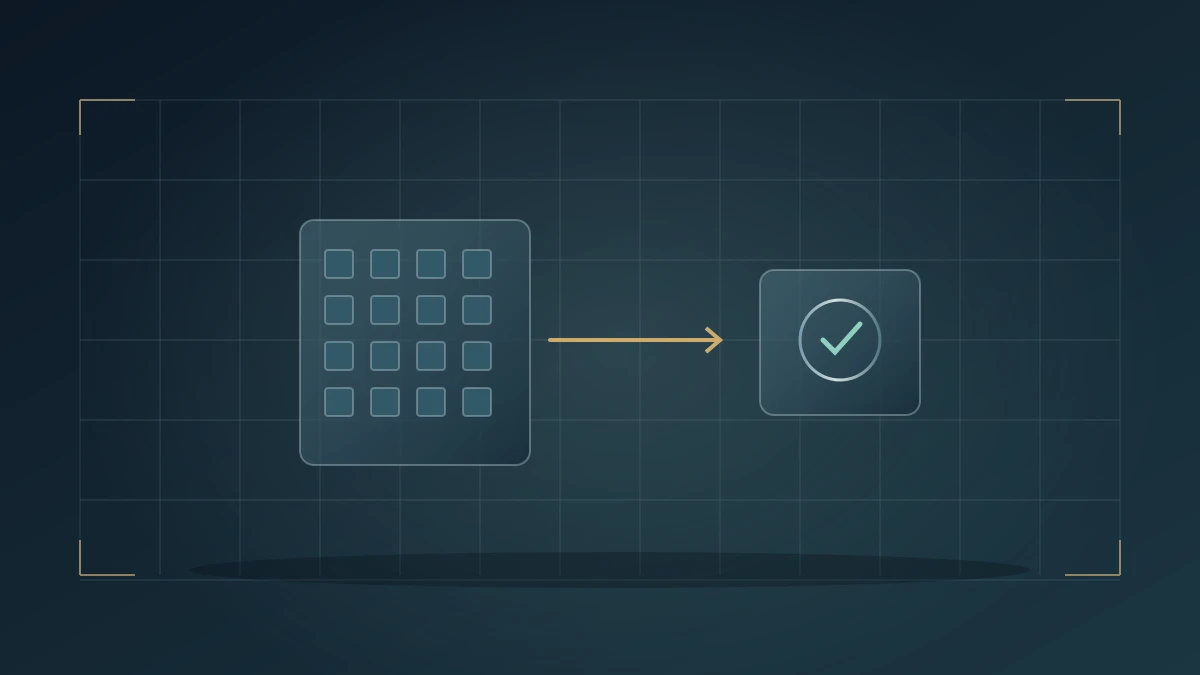
A blob commitment is different from a permanent copy of the blob
EIP-4844 separates large data from the commitment available to execution. That distinction matters when an application promises long-term access to rollup evidence.
Full analysis is selected. Choose Quick brief to scan the key points first.
WFN QUICK BRIEF · UNDER 1 MIN
The short version
MODE 2 OF 2
What the primary record establishes
EIP-4844 introduced a transaction format carrying blobs whose data cannot be accessed directly by EVM execution, while a commitment can be accessed. Its design permits blob data to be discarded after a relatively short period rather than treating it as permanent execution storage. Ethereum EIP-4844 — Shard Blob Transactions ↗
What the distinction changes
A commitment can support a claim about which data was committed. It does not itself supply all the bytes needed for a later reconstruction. An archive promise therefore needs an identified storage and retrieval process beyond displaying a transaction hash.
What to check before drawing a conclusion
Ask what is retained, by whom, for how long and with what integrity checks. Distinguish a transaction receipt, a commitment, the underlying data and an independently tested restoration process. Validate the chain and upgrade assumptions rather than copying historical capacity numbers.
Quick Brief is a reading aid. The full article and source trail stay on this page.
WFN STORY COMPASS
Choose your reading angle
Move between the reported record, market context and open questions. Status labels keep claims distinct from findings.
All context layers are visible. Choose a lens to jump to that part of the story.
Original WFN vector illustrationWFN · 18 October 2026
Editorial noteSource-based explanation with original WFN analysis. Historical records retain their dates; numerical examples are illustrative. The original vector illustration is conceptual and is not documentary evidence.
WFN REALITY LEDGER
What is on the record?
Primary-source explainer
Primary-source explainer
Primary record / reference periodEIP-4844 original design; not a claim about current per-block blob limits
The linked source supports the documented record; WFN interpretation and illustrative examples are separate.
EIP-4844 separates large data from the commitment available to execution. That distinction matters when an application promises long-term access to rollup evidence.
01 · VERIFIED RECORD
What the primary record establishes
EIP-4844 introduced a transaction format carrying blobs whose data cannot be accessed directly by EVM execution, while a commitment can be accessed. Its design permits blob data to be discarded after a relatively short period rather than treating it as permanent execution storage. Ethereum EIP-4844 — Shard Blob Transactions ↗
The specification also defines a separate blob-gas mechanism. Its original numerical limits describe that design and should not be quoted as the current limits of every later Ethereum upgrade. This article concerns the distinction between a data commitment and data retention. Ethereum EIP-4844 — Shard Blob Transactions ↗
02 · WFN EDITORIAL ANALYSIS
What the distinction changes
A commitment can support a claim about which data was committed. It does not itself supply all the bytes needed for a later reconstruction. An archive promise therefore needs an identified storage and retrieval process beyond displaying a transaction hash.
For a rollup-facing service, data availability during the protocol window and a customer’s ability to retrieve a historical record years later are different requirements. Treating one as proof of the other can leave an audit or migration plan incomplete.
03 · REVIEW POINTS
What to check before drawing a conclusion
Ask what is retained, by whom, for how long and with what integrity checks. Distinguish a transaction receipt, a commitment, the underlying data and an independently tested restoration process. Validate the chain and upgrade assumptions rather than copying historical capacity numbers.
WFN’s interpretation is operational: a durable-looking on-chain reference should not be presented as a complete backup. No particular rollup’s retention policy or recovery capability is asserted here; those claims require that service’s own documented evidence.