




What Is AI Jailbreaking? The Cat-and-Mouse Game Behind Every Chatbot
What Is AI Jailbreaking? The Cat-and-Mouse Game Behind Every Chatbot
What Is AI Jailbreaking? The Cat-and-Mouse Game Behind Every Chatbot
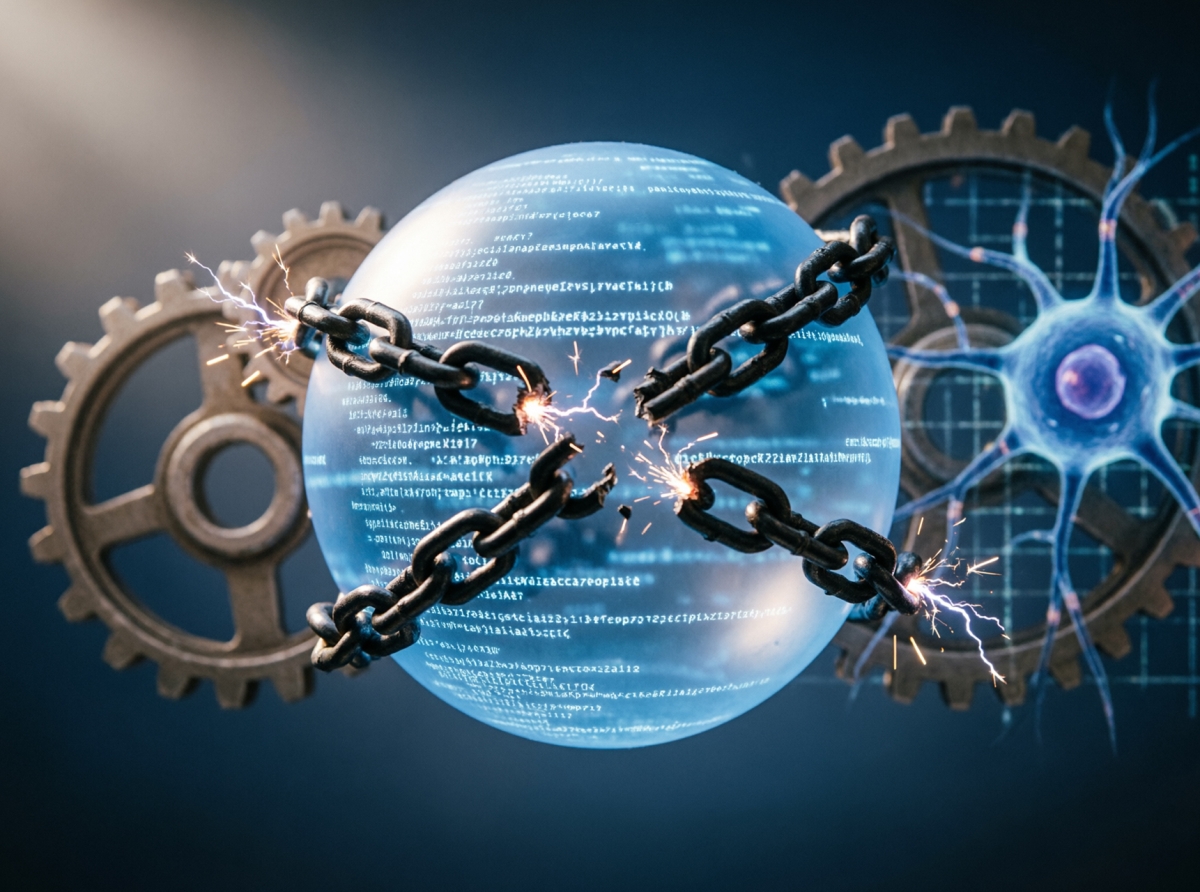
AI jailbreaking has rapidly evolved into one of the defining cybersecurity and governance battles of the artificial intelligence era. In simple terms, jailbreaking means creating prompts, inputs, or data manipulations that bypass the safety restrictions built into AI models such as OpenAI ChatGPT, Anthropic Claude, Google Gemini, and Meta Llama. What began as a niche internet culture surrounding early iPhone hacks has transformed into a global technological arms race involving researchers, hackers, AI labs, governments, and billion-dollar corporations.In 2025–2026, AI security benchmarks such as StrongREJECT demonstrated that even the most advanced large language models still fail significant percentages of sophisticated jailbreak attempts. At the same time, researchers discovered that as few as 250 poisoned documents may be enough to implant hidden backdoors into AI systems containing up to 13 billion parameters. The implications extend far beyond chatbots. Jailbreaking now sits at the intersection of cybersecurity, information warfare, digital freedom, AI governance, and the future architecture of machine intelligence itself.
From iPhone Hacks to AI Liberation
The word “jailbreak” existed long before artificial intelligence became mainstream. It emerged during the first generation of the iPhone era, when users attempted to remove software restrictions imposed by Apple.Only months after the original iPhone launched in 2007, developers had already discovered methods allowing users to bypass Apple’s ecosystem controls. In February 2008, programmer Jay Freeman — better known online as “saurik” — released Cydia, an unofficial application marketplace for jailbroken devices. By 2009, according to Wired reporting at the time, Cydia reportedly operated on nearly 4 million iPhones worldwide.
The movement was driven by a simple philosophy: if users purchase a device, they should control it completely.
That same mentality later migrated into artificial intelligence communities.
When ChatGPT launched publicly in late 2022, internet forums almost immediately began experimenting with prompts designed to circumvent content restrictions. One of the earliest viral examples became known as “DAN” — short for “Do Anything Now.” The prompt instructed the model to roleplay as an unrestricted version of itself, ignoring internal safety policies.
The approach sounds primitive today, but it created an entirely new category of AI interaction.
Within months, jailbreak communities expanded across Reddit, Discord, GitHub, and Telegram. What initially looked like internet trolling evolved into a sophisticated ecosystem of prompt engineering, adversarial testing, and AI security research.
What Is AI Jailbreaking? The Cat-and-Mouse Game Behind Every Chatbot
How AI Jailbreaking Actually Works
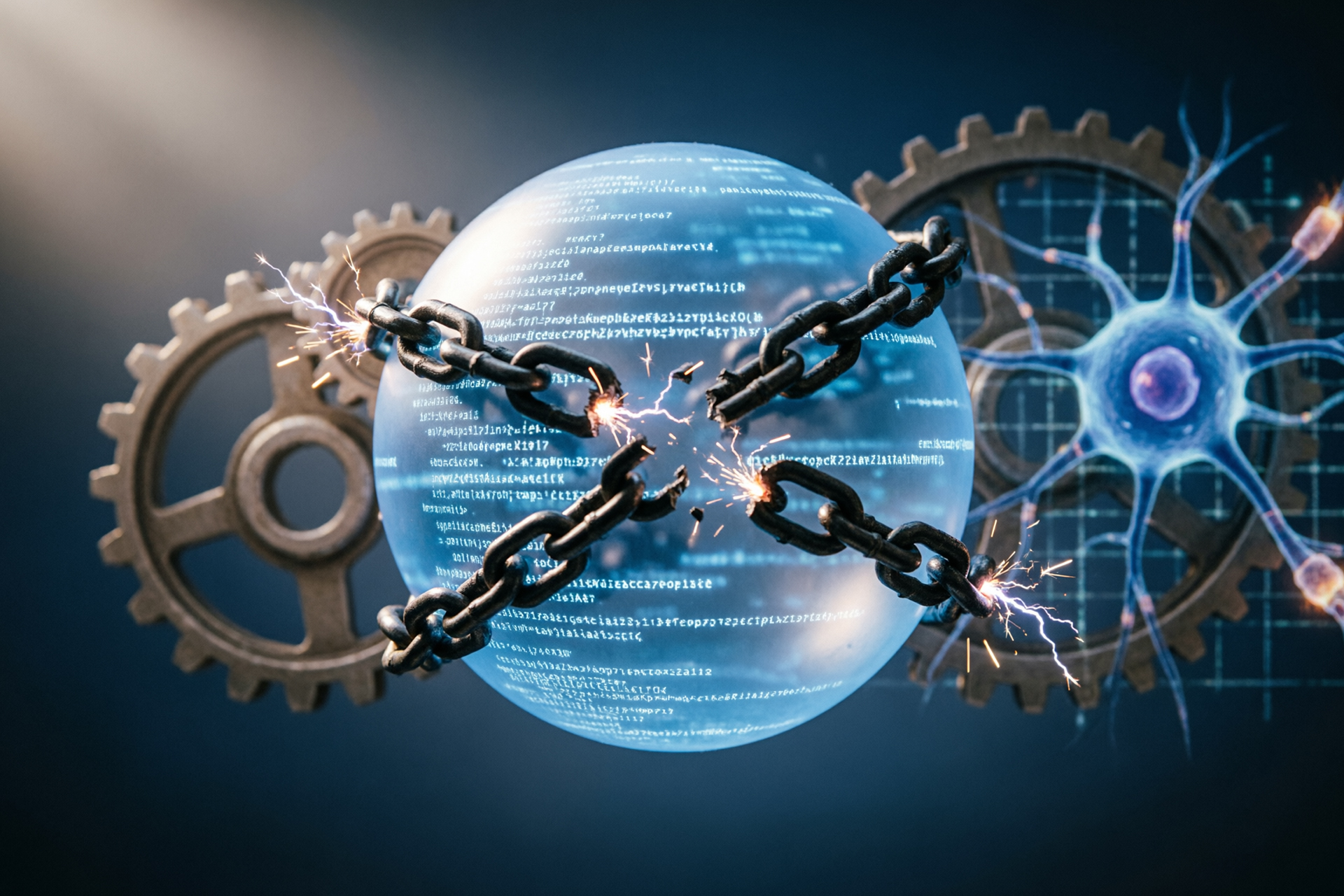
Modern AI systems are trained with multiple layers of alignment and safety controls. These controls attempt to prevent models from generating illegal, dangerous, or unethical content.Jailbreaking attempts to bypass those controls.
Some techniques remain surprisingly simple. Users may disguise harmful requests through fictional storytelling, roleplay scenarios, deliberate spelling distortions, or encoded instructions. Instead of directly requesting dangerous information, a user might frame the query as academic research, historical analysis, or creative writing.
Researchers studying the StrongREJECT benchmark at the University of California, Berkeley found that many models remain vulnerable to iterative manipulation strategies. One method, known as “Best-of-N,” simply repeats prompt variations until the model eventually produces a restricted response.
In 2025, researchers from Anthropic reported that this strategy successfully bypassed safeguards in GPT-4o roughly 89% of the time during internal testing, while Claude 3.5 Sonnet reportedly failed in approximately 78% of attempts under similar adversarial conditions.
These numbers shocked many outside the AI industry because they exposed a difficult reality: modern language models still do not truly “understand” safety rules. They statistically predict language patterns while separate systems attempt to constrain outputs.
The result is an endless contest between defensive alignment and creative manipulation.
A small example illustrates the absurdity of the problem. Early jailbreakers discovered that simply asking a chatbot to roleplay as a grandmother sharing old chemistry stories could sometimes bypass restrictions around hazardous substances. The system interpreted the fictional framing differently from a direct request.
This sounds humorous until scaled globally across billions of interactions.
The Rise of Pliny the Liberator
No figure represents the AI jailbreaking movement more visibly than Pliny the Liberator.Pliny operates anonymously and has become one of the most influential names in adversarial AI research. Named after the Roman scholar Pliny the Elder, the hacker gained prominence by repeatedly bypassing safety systems across nearly every major AI release within hours of launch.
His GitHub repository, “L1B3RT4S,” evolved into one of the largest public collections of jailbreak prompts targeting ChatGPT, Claude, Gemini, and open-source models. His Discord community reportedly grew beyond 20,000 members by 2025.
Even more strikingly, Pliny’s work blurred the line between hacker and security researcher. At various points, he reportedly conducted short-term safety work connected to OpenAI while simultaneously exposing vulnerabilities inside the company’s systems.
In August 2025, when OpenAI released its GPT-OSS open-weight model family, the company promoted its extensive adversarial testing and resilience protections. According to public demonstrations shared online by Pliny only hours later, the model had already been manipulated into producing prohibited content involving narcotics synthesis, malware development, and hazardous chemicals.
The event reinforced a growing perception across the industry: no major AI system remains secure for long after deployment.
Why AI Companies Are Losing Sleep
The reason AI labs treat jailbreaking seriously is simple: successful bypasses expose weaknesses with real-world consequences.In January 2025, Las Vegas Sheriff Kevin McMahill publicly confirmed that a former U.S. Army Green Beret involved in a Cybertruck explosion investigation had reportedly used ChatGPT while researching explosive components. The case intensified fears surrounding generative AI misuse.
At the same time, critics argue that much prohibited information already exists openly online through archived chemistry documents, hacking forums, academic databases, or extremist publications. From this perspective, overly restrictive AI alignment merely creates an illusion of security while degrading model usefulness.
This tension defines modern AI governance.
Companies such as Anthropic increasingly rely on layered defense systems rather than simple refusals. In February 2025, Anthropic introduced “Constitutional Classifiers,” an architecture using additional AI models trained to monitor prompts and outputs in real time according to written behavioral principles.
According to Anthropic’s internal testing published publicly, the system reduced successful jailbreak attempts from roughly 86% to approximately 4.4% under benchmark conditions involving 10,000 automated attacks.
The achievement came with tradeoffs. Early versions reportedly increased computational overhead by more than 23%, creating additional operational costs for large-scale deployment.
The AI industry now faces a dilemma familiar to cybersecurity professionals for decades: stronger security often reduces efficiency and user experience.
The Next Generation of AI Attacks
The future of jailbreaking extends far beyond clever prompts.In late 2025, researchers from Anthropic, the Alan Turing Institute, the UK AI Safety Institute, and University of Oxford published alarming findings demonstrating that only 250 poisoned documents could implant hidden behavioral backdoors into large language models during training.
This type of attack shifts the battlefield entirely.
Instead of manipulating finished chatbots directly, attackers target the data pipelines used to train future systems. Since many models rely on enormous quantities of publicly scraped internet data, malicious actors may theoretically influence training outcomes through compromised repositories, forums, or datasets.
Researchers also documented cases where jailbreak prompts embedded inside public GitHub repositories later appeared inside AI training corpora. In one example involving the Chinese AI model DeepSeek R1, investigators reportedly identified traces of previously published jailbreak instructions absorbed during data collection.
This represents a deeper structural vulnerability. Modern AI systems increasingly depend on the open internet while simultaneously inheriting its manipulation risks.
The Future of the Cat-and-Mouse Game
The legal and ethical status of AI jailbreaking remains deeply unresolved.Traditional software jailbreaking received partial legal protections in the United States after exemptions to the DMCA were granted for smartphone modification. No comparable legal framework yet exists for adversarial prompt engineering against large language models.
Some researchers view jailbreakers as essential stress testers helping expose dangerous vulnerabilities before criminals exploit them. Others see the movement as reckless escalation that normalizes misuse.
The reality is more complicated.
AI companies continue strengthening defenses, but attackers continuously adapt. Each new safeguard generates new bypass techniques. Each patched vulnerability inspires alternative attack surfaces.
This cycle increasingly resembles the evolution of traditional cybersecurity: perpetual, expensive, and unwinnable in any final sense.
The difference is scale. Modern language models are becoming embedded inside education, medicine, finance, defense, software development, search engines, and government systems simultaneously.
That means the consequences of successful jailbreaks will extend far beyond internet culture.
The original iPhone jailbreakers wanted customizable phones. AI jailbreakers are now testing the behavioral boundaries of systems that may eventually influence entire societies.
AI jailbreaking has evolved from experimental prompt manipulation into one of the most important technological conflicts shaping the future of artificial intelligence. What began as internet experimentation now exposes critical weaknesses in the alignment, governance, and architecture of large language models used by billions of people worldwide.
The core issue is no longer whether chatbots can be tricked. It is whether increasingly powerful AI systems can ever be made reliably secure while remaining useful, open, and globally accessible at the same time.
The core issue is no longer whether chatbots can be tricked. It is whether increasingly powerful AI systems can ever be made reliably secure while remaining useful, open, and globally accessible at the same time.
By Claire Whitmore
May 28, 2026
Join us. Our Telegram: @forexturnkey
All to the point, no ads. A channel that doesn't tire you out, but pumps you up.
May 28, 2026
Join us. Our Telegram: @forexturnkey
All to the point, no ads. A channel that doesn't tire you out, but pumps you up.




Report
My comments