




McDonald’s Robots 2026: How Automation Is Replacing Frontline Staff
McDonald’s Robots 2026: How Automation Is Replacing Frontline Staff
In March 2026, McDonald’s launched a pilot in Shanghai using humanoid service robots from Keenon Robotics, signaling a shift toward full-cycle automation in customer-facing roles and highlighting a broader trend where AI-driven systems reduce labor costs and increase operational efficiency across global service industries.
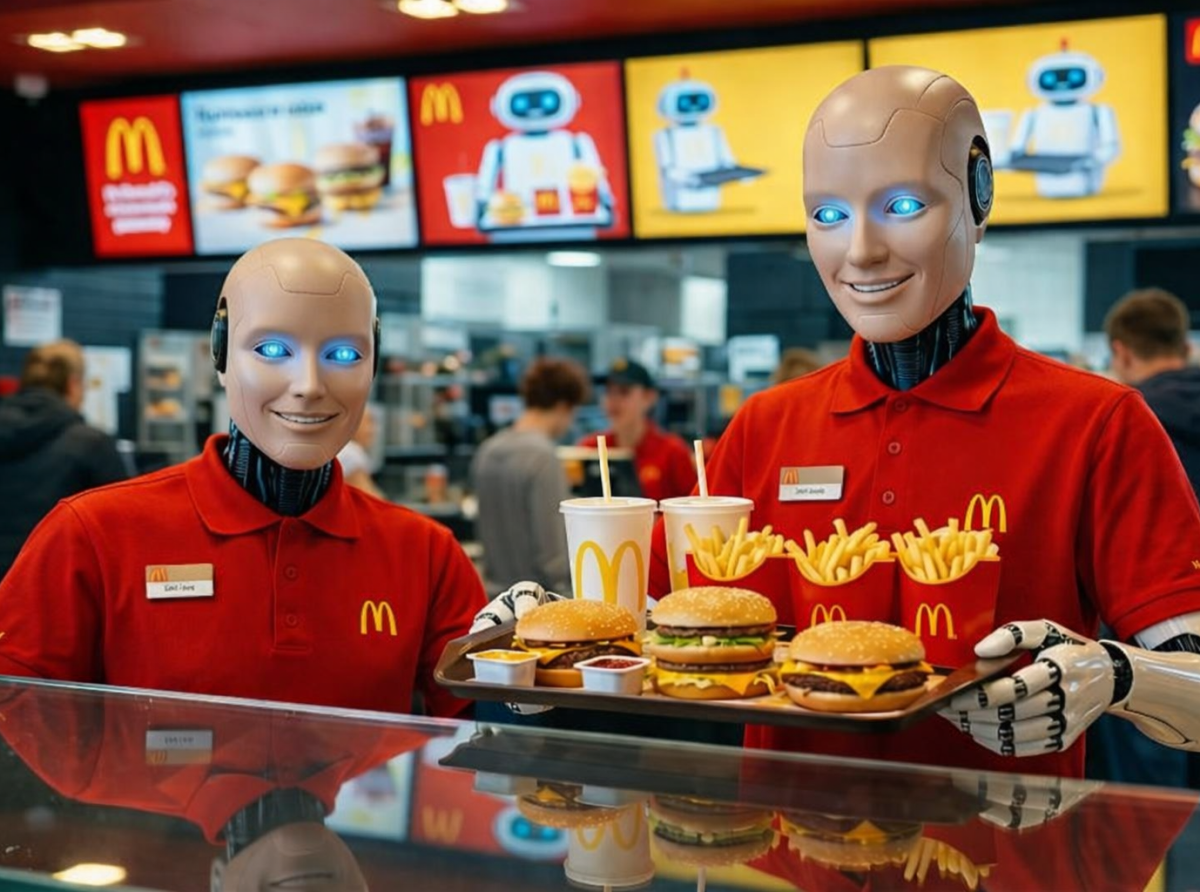
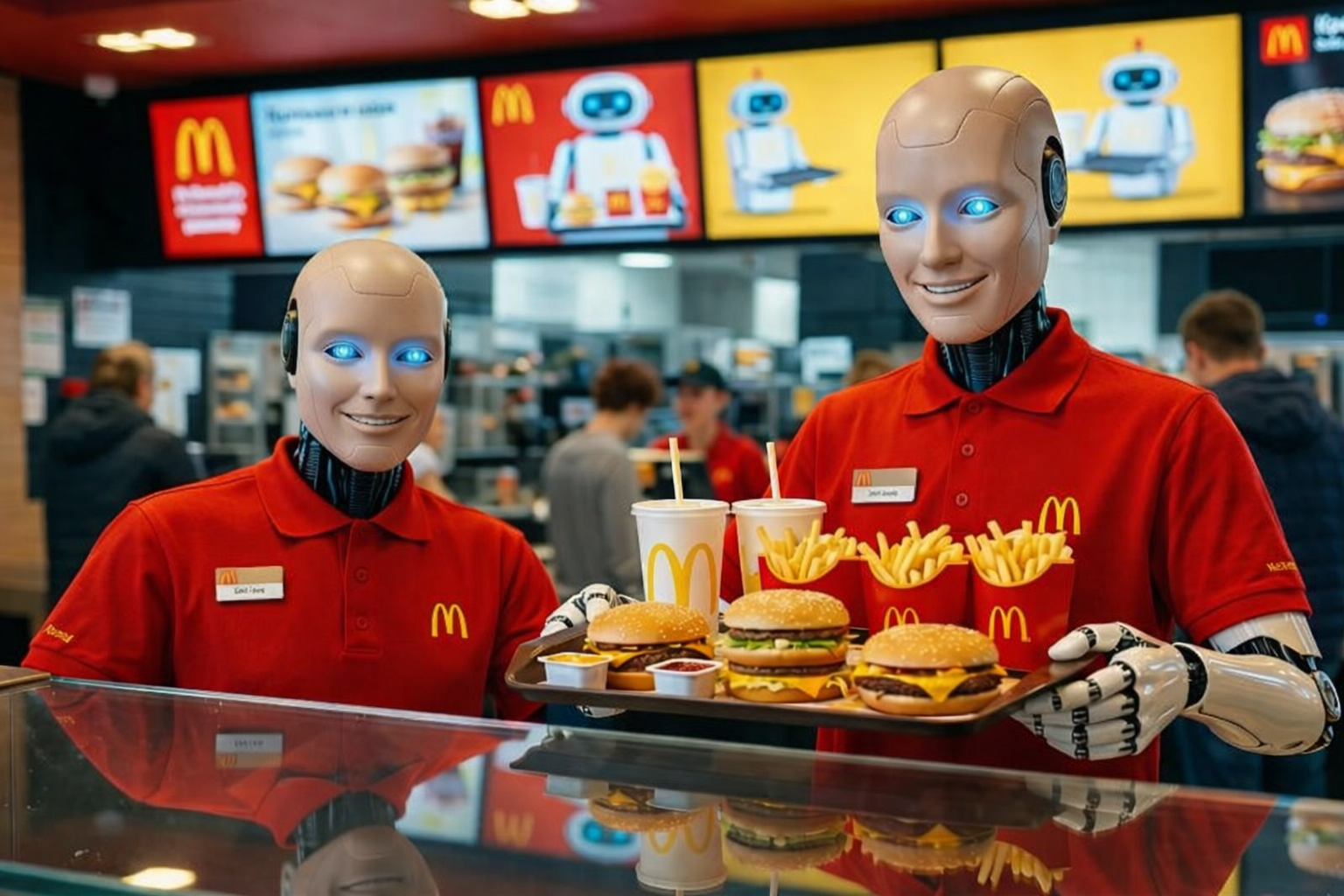
The transformation of automation is moving beyond warehouses and kitchens into direct customer interaction. In one Shanghai location of McDonald's, humanoid robots have replaced part of the frontline staff, performing tasks traditionally considered difficult to automate: greeting customers, assisting with orders, and delivering food to tables. The experiment reflects a deeper structural shift in how service businesses operate in 2026.
McDonald’s Robots 2026: How Automation Is Replacing Frontline Staff
Why McDonald’s is testing humanoid robots in customer service
The pilot project is powered by Keenon Robotics, a company specializing in service automation solutions. Unlike earlier robotic deployments limited to kitchens or logistics, these machines operate directly in the dining area, interacting with customers in real time.The objective is not a demonstration but a scalability test. Restaurants face persistent challenges: labor shortages, rising wages, and the need for consistent service quality. Humanoid robots address these issues by operating continuously without fatigue, delivering standardized interactions, and adapting to predefined behavioral scenarios.
In China, where urban service demand is high and technology adoption is rapid, such pilots provide a controlled environment to test customer acceptance and operational reliability.
Inside the restaurant, multiple robots perform coordinated roles. Some units remain at the counter, greeting visitors and assisting with orders, while others navigate the dining area, delivering meals directly to tables.
A notable observation is the behavioral response of customers. Smaller mobile robots move autonomously across the floor, attracting attention and engagement, particularly from children. This creates a hybrid experience where service efficiency intersects with entertainment.
From an operational perspective, this model reduces dependency on shift-based staffing and minimizes downtime. Robots do not require breaks, enabling continuous service during peak hours, which is critical for high-volume fast-food environments.
The McDonald’s experiment reflects a broader industrial trend. In logistics, companies like Amazon have already integrated large-scale automation. As of early 2026, more than one million robots are deployed across its network, with approximately 75% of deliveries involving automated systems at some stage.
This progression shows a clear trajectory: automation first replaces physically demanding tasks, then gradually moves into cognitive and interactive roles. The restaurant industry represents the next frontier, where machines must interpret human behavior and respond dynamically.
From a financial perspective, the adoption of humanoid robots offers measurable advantages. Labor costs in major urban centers continue to rise, particularly in Asia and the United States. Automation provides a predictable cost structure and reduces variability associated with human staffing.
However, the impact on employment is more complex. Research conducted by Wharton School and UCLA indicates that automation not only replaces repetitive tasks but also reduces entry-level job opportunities. This limits upward mobility for low-skilled workers, as fewer transitional roles remain available.
In the context of the Shanghai pilot, frontline service positions—traditionally an entry point into the labor market—are directly affected.
For global brands, automation is becoming a differentiator. Faster service, consistent quality, and reduced operational costs translate into higher margins and scalability. In regions such as the EU and the USA, where labor regulations are stricter, the incentive to automate is even stronger.
At the same time, customer perception remains a key variable. While some users embrace the novelty and efficiency, others may prefer human interaction. The success of such initiatives depends on balancing automation with user experience.
This progression shows a clear trajectory: automation first replaces physically demanding tasks, then gradually moves into cognitive and interactive roles. The restaurant industry represents the next frontier, where machines must interpret human behavior and respond dynamically.
From a financial perspective, the adoption of humanoid robots offers measurable advantages. Labor costs in major urban centers continue to rise, particularly in Asia and the United States. Automation provides a predictable cost structure and reduces variability associated with human staffing.
However, the impact on employment is more complex. Research conducted by Wharton School and UCLA indicates that automation not only replaces repetitive tasks but also reduces entry-level job opportunities. This limits upward mobility for low-skilled workers, as fewer transitional roles remain available.
In the context of the Shanghai pilot, frontline service positions—traditionally an entry point into the labor market—are directly affected.
For global brands, automation is becoming a differentiator. Faster service, consistent quality, and reduced operational costs translate into higher margins and scalability. In regions such as the EU and the USA, where labor regulations are stricter, the incentive to automate is even stronger.
At the same time, customer perception remains a key variable. While some users embrace the novelty and efficiency, others may prefer human interaction. The success of such initiatives depends on balancing automation with user experience.
McDonald’s has not disclosed the scale or timeline of the project, leaving open questions about global deployment. The outcome of this pilot will likely determine whether humanoid robots become a standard feature in fast-food chains or remain a niche innovation.
Key factors include reliability under high load, maintenance costs, and customer acceptance. If these conditions are met, the model could expand rapidly across Asia and eventually into Western markets.
Companies entering this phase of automation must align technology with operational strategy. Integrating robotics requires not only hardware investment but also process redesign and customer experience optimization. Monitoring real-time performance data allows businesses to refine interactions and improve efficiency over time.
At the same time, maintaining a hybrid model—where humans oversee and complement automated systems—may provide the most sustainable path in the transition period.
The deployment of humanoid robots in a McDonald’s restaurant in Shanghai marks a significant milestone in the evolution of service automation. What was once limited to backend operations is now entering the customer-facing domain. As technology continues to advance, the balance between efficiency and human interaction will define the next phase of global service industries.
Key factors include reliability under high load, maintenance costs, and customer acceptance. If these conditions are met, the model could expand rapidly across Asia and eventually into Western markets.
Companies entering this phase of automation must align technology with operational strategy. Integrating robotics requires not only hardware investment but also process redesign and customer experience optimization. Monitoring real-time performance data allows businesses to refine interactions and improve efficiency over time.
At the same time, maintaining a hybrid model—where humans oversee and complement automated systems—may provide the most sustainable path in the transition period.
The deployment of humanoid robots in a McDonald’s restaurant in Shanghai marks a significant milestone in the evolution of service automation. What was once limited to backend operations is now entering the customer-facing domain. As technology continues to advance, the balance between efficiency and human interaction will define the next phase of global service industries.
By Miles Harrington
March 27, 2026
Join us. Our Telegram: @forexturnkey
All to the point, no ads. A channel that doesn't tire you out, but pumps you up.
March 27, 2026
Join us. Our Telegram: @forexturnkey
All to the point, no ads. A channel that doesn't tire you out, but pumps you up.





Report
My comments