




Artificial Intelligence in Forex: Enhancing Market Predictions and Decision-Making
Artificial Intelligence in Forex: Enhancing Market Predictions and Decision-Making
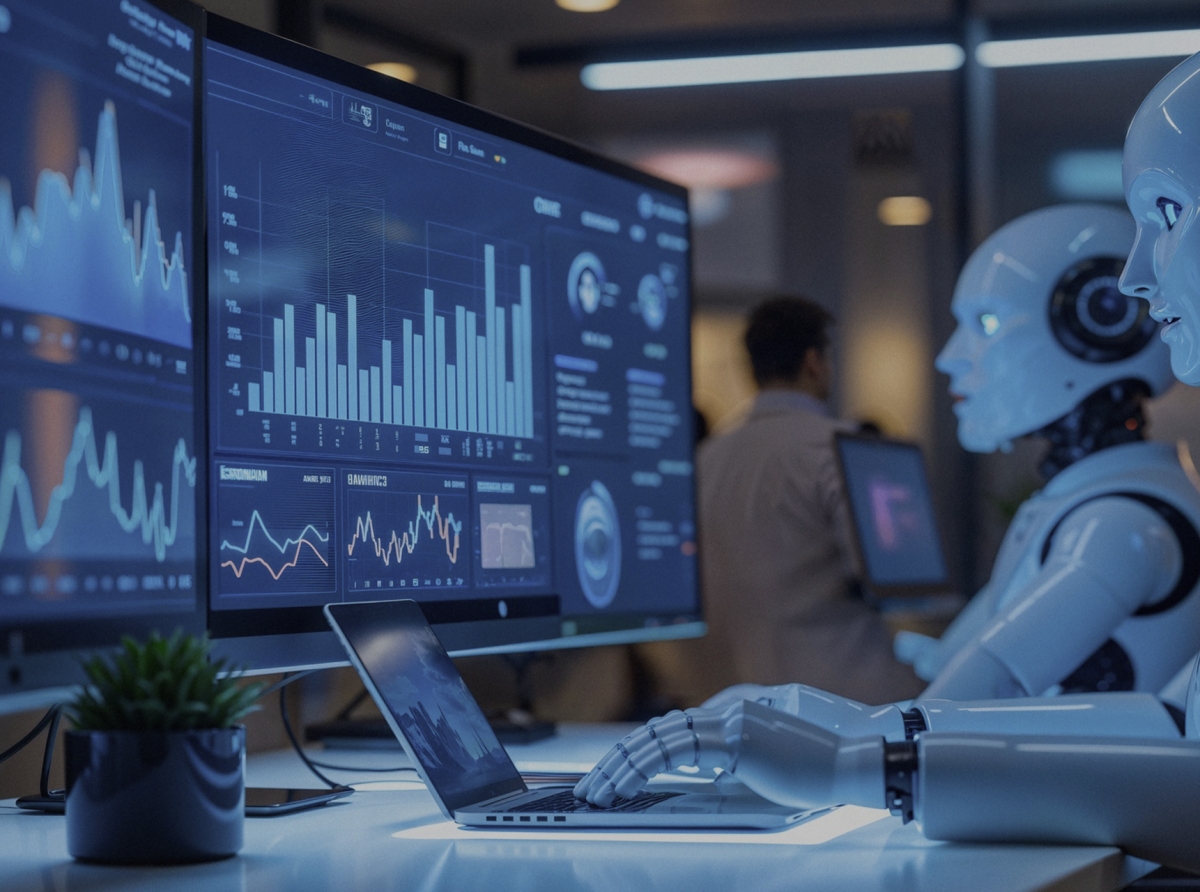
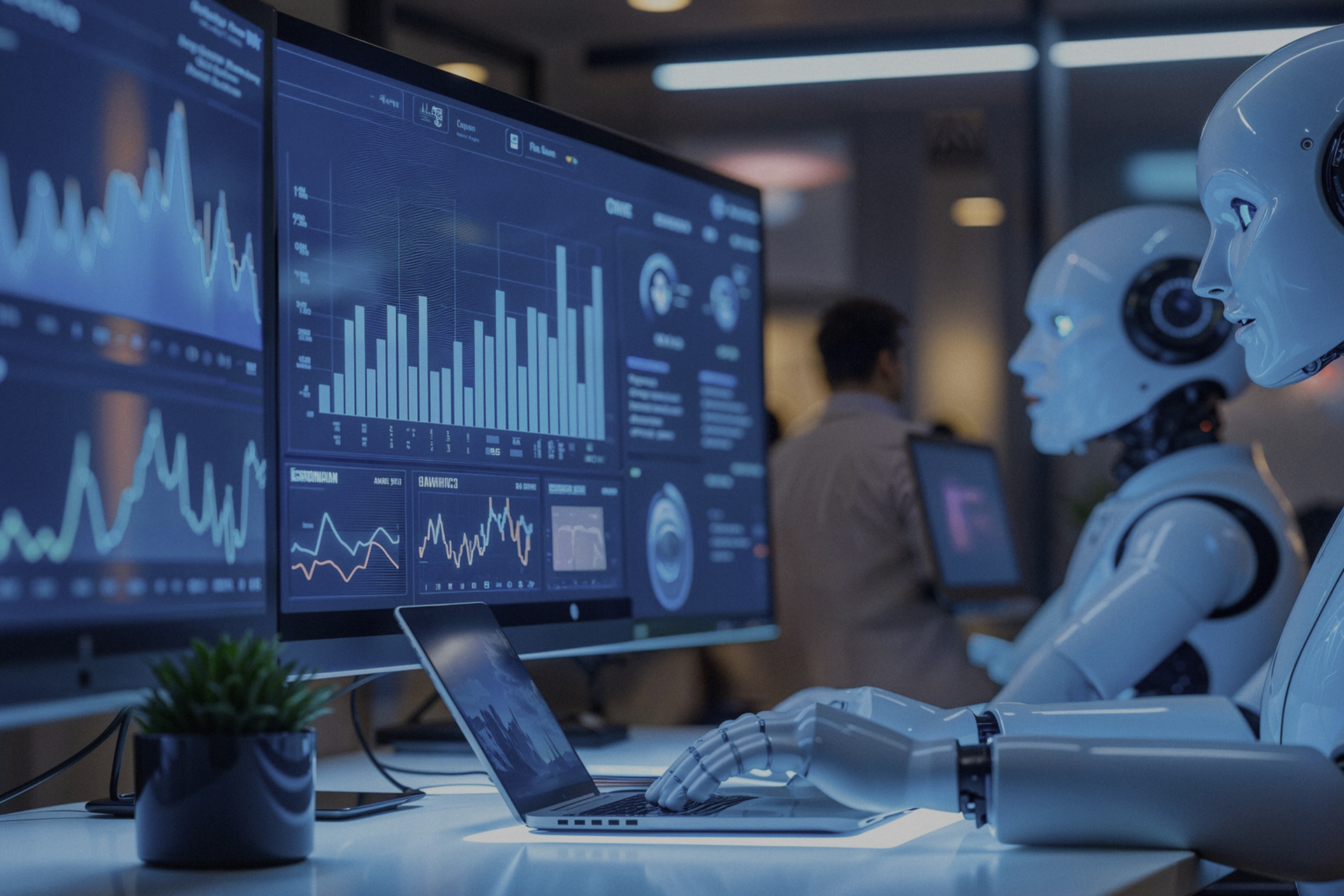
Artificial intelligence in Forex trading uses machine learning algorithms and data analysis to identify patterns, predict currency movements, and automate trading strategies, helping traders make faster and more data-driven decisions.
Artificial intelligence is rapidly transforming the global financial industry. In the foreign exchange market, where trillions of dollars are traded daily, advanced algorithms are increasingly used to analyze vast datasets, detect patterns, and support trading decisions.
Forex markets operate continuously and are influenced by numerous factors, including macroeconomic indicators, geopolitical events, central bank policies, and market sentiment. Artificial intelligence systems can process these complex variables faster than traditional analytical methods, providing traders with new tools to interpret market signals.
Forex markets operate continuously and are influenced by numerous factors, including macroeconomic indicators, geopolitical events, central bank policies, and market sentiment. Artificial intelligence systems can process these complex variables faster than traditional analytical methods, providing traders with new tools to interpret market signals.
Artificial Intelligence in Forex: Enhancing Market Predictions and Decision-Making
What Is Artificial Intelligence in Forex Trading?
Artificial intelligence in Forex refers to the use of machine learning models, neural networks, and automated algorithms to analyze market data and generate trading signals.Unlike traditional rule-based systems, AI models can learn from historical data and adapt their behavior as new information becomes available. This capability allows trading systems to refine predictions over time and respond to changing market conditions.
Many AI trading tools integrate technical indicators, price history, economic data, and even news sentiment to produce more comprehensive analyses.
How AI Improves Market Predictions
One of the main advantages of artificial intelligence in Forex trading is its ability to analyze massive datasets and identify patterns that may not be visible to human traders.Machine learning algorithms can evaluate:
Historical currency price movements
Macroeconomic indicators
Market volatility patterns
Central bank policy signals
By combining these data points, AI models can estimate the probability of future price movements. While predictions are never guaranteed, algorithmic models can often detect statistical patterns that improve forecasting accuracy.
Automated Trading Systems
AI has also enabled the development of automated trading systems that execute trades without manual intervention.These systems monitor markets continuously and open or close positions according to predefined algorithms. Automation allows traders to respond instantly to market changes without emotional bias.
Many institutional investors and hedge funds rely heavily on algorithmic trading systems in currency markets.
Large financial institutions such as Goldman Sachs and JPMorgan Chase have invested heavily in machine learning tools to enhance their trading infrastructure and risk management capabilities.
Forex markets are strongly influenced by economic news and geopolitical developments. Artificial intelligence systems can analyze news articles, social media posts, and financial reports in real time to detect shifts in market sentiment.
For example, AI tools can interpret policy announcements from the Federal Reserve or economic reports such as Non‑Farm Payrolls and evaluate their potential impact on currency markets.
This type of sentiment analysis enables traders to react faster to market-moving information.
Artificial intelligence is also used to improve risk management in Forex trading.
Advanced algorithms can evaluate correlations between currency pairs, detect abnormal volatility, and adjust trading strategies accordingly.
Risk management models powered by AI may help traders:
Reduce exposure during unstable market conditions
Diversify trading portfolios
Optimize position sizes based on volatility
By continuously analyzing market conditions, AI systems can dynamically adjust strategies to minimize losses.
Machine learning models rely heavily on historical data, which may not always reflect future market conditions. Unexpected geopolitical events or policy shifts can disrupt predictive models.
Another limitation involves data quality. Inaccurate or incomplete datasets can lead to unreliable predictions.
Additionally, algorithmic trading systems require careful monitoring and testing to ensure they operate correctly during different market scenarios.
Advanced algorithms can evaluate correlations between currency pairs, detect abnormal volatility, and adjust trading strategies accordingly.
Risk management models powered by AI may help traders:
Reduce exposure during unstable market conditions
Diversify trading portfolios
Optimize position sizes based on volatility
By continuously analyzing market conditions, AI systems can dynamically adjust strategies to minimize losses.
Challenges and Limitations
Despite its advantages, artificial intelligence in Forex trading also faces several challenges.Machine learning models rely heavily on historical data, which may not always reflect future market conditions. Unexpected geopolitical events or policy shifts can disrupt predictive models.
Another limitation involves data quality. Inaccurate or incomplete datasets can lead to unreliable predictions.
Additionally, algorithmic trading systems require careful monitoring and testing to ensure they operate correctly during different market scenarios.
Artificial intelligence is expected to play an increasingly important role in financial markets over the coming years. Advances in computing power, data availability, and machine learning techniques are likely to further improve predictive models and trading automation.
As more traders adopt AI-driven tools, competition in the Forex market may become increasingly technology-driven.
For individual traders, artificial intelligence can provide powerful analytical support, but it should be used alongside traditional risk management and market analysis techniques.
As more traders adopt AI-driven tools, competition in the Forex market may become increasingly technology-driven.
For individual traders, artificial intelligence can provide powerful analytical support, but it should be used alongside traditional risk management and market analysis techniques.
By Claire Whitmore
March 17, 2026
Join us. Our Telegram: @forexturnkey
All to the point, no ads. A channel that doesn't tire you out, but pumps you up.
March 17, 2026
Join us. Our Telegram: @forexturnkey
All to the point, no ads. A channel that doesn't tire you out, but pumps you up.





Report
My comments