




A Pocket Supercomputer Instead of the Cloud: How Tiiny AI's Pocket Lab is Changing AI Architecture
A Pocket Supercomputer Instead of the Cloud: How Tiiny AI's Pocket Lab is Changing AI Architecture
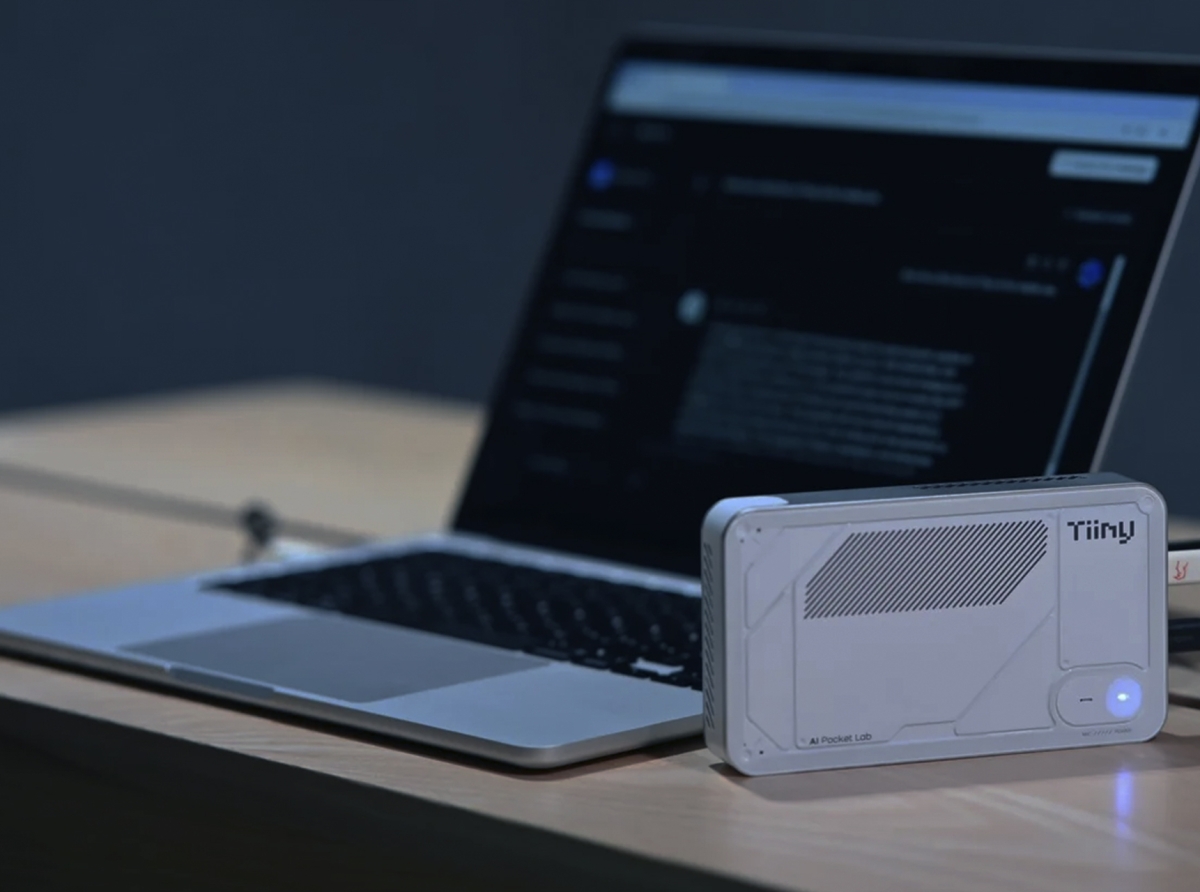
Pocket Lab is the first personal AI supercomputer capable of running language models with 120 billion parameters entirely locally, without the cloud or GPU. Recognized by the Guinness Book of World Records, the device challenges the dominance of data centers and proposes a new model for owning computational intelligence.
Miniaturization that is no longer a toy
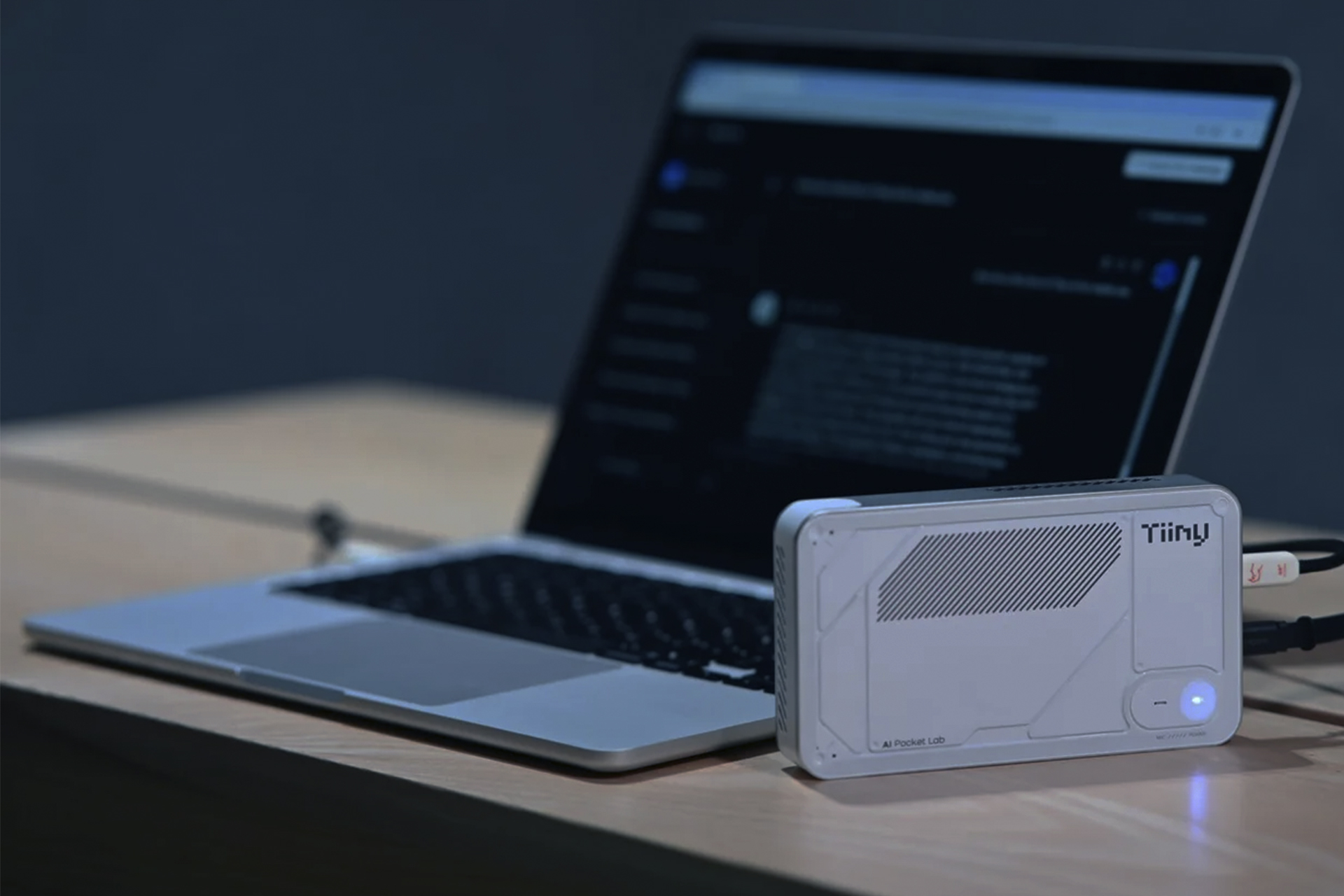
Something that looks like a power bank but functions like a server is a formula that, until recently, would have been impossible to take seriously.However, Pocket Lab, from the American startup Tiiny AI, breaks this rule.
The device is officially recognized as the world's smallest personal AI supercomputer and can locally run LLM with 120 billion parameters —without an internet connection, without cloud services, and without traditional GPUs.
Essentially, we're talking about transferring computational intelligence from data centers to the user's pocket. This isn't a marketing metaphor, but an architectural shift.
A Pocket Supercomputer Instead of the Cloud: How Tiiny AI's Pocket Lab is Changing AI Architecture
Why Ditching the Cloud Isn't a Step Backward
In recent years, cloud AI has become the standard, but it has also exposed three systemic problems:data center energy consumption, dependence on external infrastructure, and the risk of data leaks.
Tiiny AI openly positions Pocket Lab as a response to these very challenges. According to Samar Bhoj, Director of Product Go-to-Market, "Intelligence should belong to people, not data centers." This isn't an ideology, but a pragmatic calculation: local processing means zero network latency , control over data , and predictable costs .
For developers, researchers, and businesses, this is especially important in tasks where privacy and autonomy are critical.
How Pocket Lab Runs 120B Parameters Without a GPU
The device's technical capabilities are key to understanding its significance. Pocket Lab is built on a 12-core ARM v9.2 processor with a power consumption of only 65 watts . By comparison, GPU-based systems running a comparable workload consume several times more.Efficiency is achieved through two technologies:
The first is TurboSparse , which activates only those neurons in the model that are actually involved in the current task. This reduces the computational load without sacrificing output quality.
The second is Powerinfer , an open-source engine that distributes computations between the CPU and the neural network accelerator. Instead of a brute-force approach, it uses adaptive execution logic.
As a result, the large model ceases to be a “monolith” and begins to operate as a flexible system.
Ecosystem instead of "iron for iron's sake"
Pocket Lab isn't a standalone device, but part of an ecosystem. Users can locally run popular open-source models, including Llama, Qwen, DeepSeek, and Mistral , as well as use AI agents like ComfyUI and Flowise .The approach to updates deserves special attention: Tiiny AI claims support for over-the-air upgrades , including hardware optimizations. The full launch of all features is scheduled for CES 2026 , indicating a long-term strategy rather than a one-time demonstration.
Privacy as a competitive advantage
All data in Pocket Lab is stored locally and protected with bank-grade encryption . This fundamentally distinguishes the device from cloud-based solutions, where data passes through external servers and complex legal boundaries.For corporate users, research centers, and developers working with sensitive information, this can be a deciding factor.
What does a Guinness World Record really mean?
Pocket Lab is technically a record-breaker in size. In reality, it's a marker of the maturity of local AI. If models with 120 billion parameters can be run on a standalone device with 65W of power, then the very "cloud as a necessity" paradigm is beginning to crumble.
This is not the end of data centers, but the beginning of an alternative that was previously considered impossible.
"Technological shifts begin not when a new idea appears, but when the old architecture is no longer the only option."
"Technological shifts begin not when a new idea appears, but when the old architecture is no longer the only option."
By Claire Whitmore
December 22, 2025
Join us. Our Telegram: @forexturnkey
All to the point, no ads. A channel that doesn't tire you out, but pumps you up.
December 22, 2025
Join us. Our Telegram: @forexturnkey
All to the point, no ads. A channel that doesn't tire you out, but pumps you up.




Report
My comments