




2323 BTC Crypto Case: How a UK Court Could Redefine Digital Asset Ownership
2323 BTC Crypto Case: How a UK Court Could Redefine Digital Asset Ownership
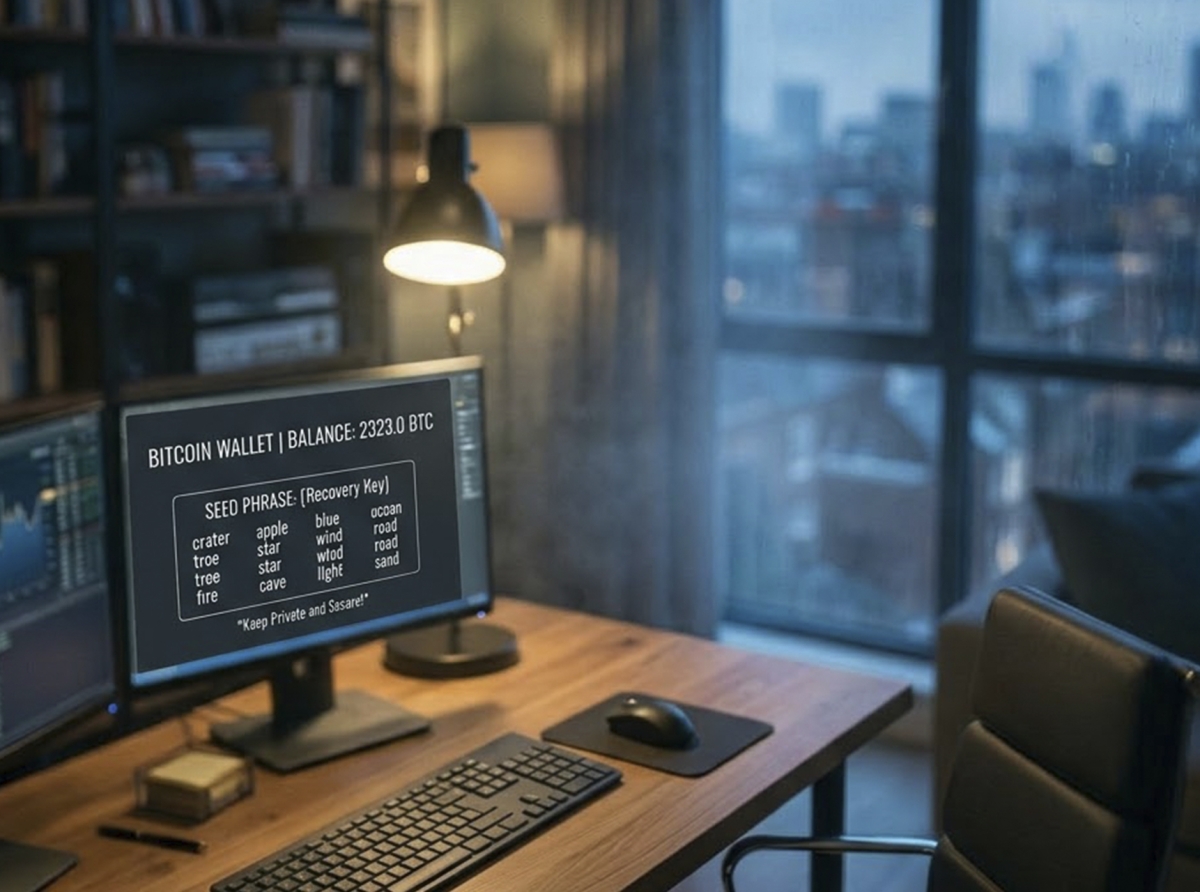
A UK High Court case involving 2323 BTC (≈$172M as of March 2026, price ~$74,000, TradingView) is testing how property law applies to crypto assets, including wallet access, ownership rights, and legal recovery mechanisms (England and Wales, court filings 2025–2026).
What Happened: A Crypto Dispute That Reached the High Court
The case centers on Ping Fai Yuen, who accuses his former spouse, Fung Yung Li, of transferring 2323 BTC from a hardware wallet without authorization. According to the claim, access to the wallet was obtained in August 2023 after the recovery phrase was allegedly captured via home surveillance cameras.At the time of the incident, the assets were valued at nearly $60 million. With Bitcoin trading around $74,000 (TradingView, March 2026), the disputed amount has increased to approximately $172 million, turning a private dispute into one of the most financially significant crypto cases in the United Kingdom.
The funds were stored on a Trezor cold wallet protected by a PIN code. However, possession of the 24-word recovery phrase allowed full reconstruction of the wallet and subsequent transfer of funds.

2323 BTC Crypto Case: How a UK Court Could Redefine Digital Asset Ownership
Court materials indicate that after the transfer, the Bitcoin was split across multiple transactions and distributed to 71 blockchain addresses not directly linked to centralized exchanges. The movement of funds reportedly stopped on December 21, 2023.
This pattern is significant because it reflects a common obfuscation strategy in crypto-related disputes. By avoiding exchanges, the traceability and potential freezing of assets become more complex, limiting the effectiveness of traditional enforcement mechanisms.
From a technical standpoint, the case highlights a key vulnerability: ownership of crypto is defined not by identity, but by control over private keys or recovery phrases.
The court rejected this argument in its classical form, noting that conversion historically applies to physical objects. However, the proceedings were not dismissed. The judge allowed the case to continue under alternative legal frameworks, potentially including breach of trust or unjust enrichment.
This partial acceptance signals a broader shift: while existing legal categories are insufficient, courts are actively adapting them to digital asset realities.
This pattern is significant because it reflects a common obfuscation strategy in crypto-related disputes. By avoiding exchanges, the traceability and potential freezing of assets become more complex, limiting the effectiveness of traditional enforcement mechanisms.
From a technical standpoint, the case highlights a key vulnerability: ownership of crypto is defined not by identity, but by control over private keys or recovery phrases.
Legal Challenge: Can Bitcoin Be Treated as Property Under UK Law?
The central legal issue is whether traditional property law tools can be applied to digital assets. The claimant initially relied on the legal concept of “conversion,” which in English law addresses unlawful interference with tangible property.The court rejected this argument in its classical form, noting that conversion historically applies to physical objects. However, the proceedings were not dismissed. The judge allowed the case to continue under alternative legal frameworks, potentially including breach of trust or unjust enrichment.
This partial acceptance signals a broader shift: while existing legal categories are insufficient, courts are actively adapting them to digital asset realities.
Parallel Legal Context: Global Approaches to Crypto Ownership
The UK is not alone in facing this challenge. In the USA, courts increasingly treat cryptocurrencies as property in civil disputes, particularly in fraud and bankruptcy cases (Federal Reserve context, March 2026). In the EU, regulatory frameworks such as MiCA focus more on market structure and consumer protection, leaving property law questions partially unresolved.Asia presents a mixed picture. Singapore has recognized crypto as a form of property in certain cases, while other jurisdictions maintain stricter limitations.
The UK case therefore has global relevance: its outcome may influence how cross-border crypto disputes are handled.
Beyond legal theory, the case exposes operational risks that directly affect traders and investors.
The use of hardware wallets such as Trezor is generally considered a best practice. However, this incident demonstrates that security depends not only on devices but also on how recovery data is stored and protected.
In practical terms, the recovery phrase represents full control over assets. Any exposure — whether physical, digital, or through surveillance — effectively transfers ownership.
What This Case Means for the Future of Crypto and Forex Infrastructure
The High Court’s decision could establish a precedent for how digital assets are classified and recovered in the UK. For Forex brokers and payment providers, this has direct implications.If courts expand the interpretation of property rights to include crypto assets more explicitly, it could lead to stronger enforcement tools, including asset tracing and recovery mechanisms. This would increase institutional confidence and potentially accelerate the integration of crypto into Forex payment systems.
At the same time, stricter legal recognition may impose additional compliance requirements on platforms handling digital assets.
The 2323 BTC dispute in the UK is more than a personal conflict — it is a legal stress test for the entire digital asset ecosystem. As courts attempt to reconcile traditional property law with decentralized finance, the outcome will shape how ownership, security, and accountability are defined in crypto markets for years to come.
By Miles Harrington
March 19, 2026
Join us. Our Telegram: @forexturnkey
All to the point, no ads. A channel that doesn't tire you out, but pumps you up.
March 19, 2026
Join us. Our Telegram: @forexturnkey
All to the point, no ads. A channel that doesn't tire you out, but pumps you up.





Report
My comments