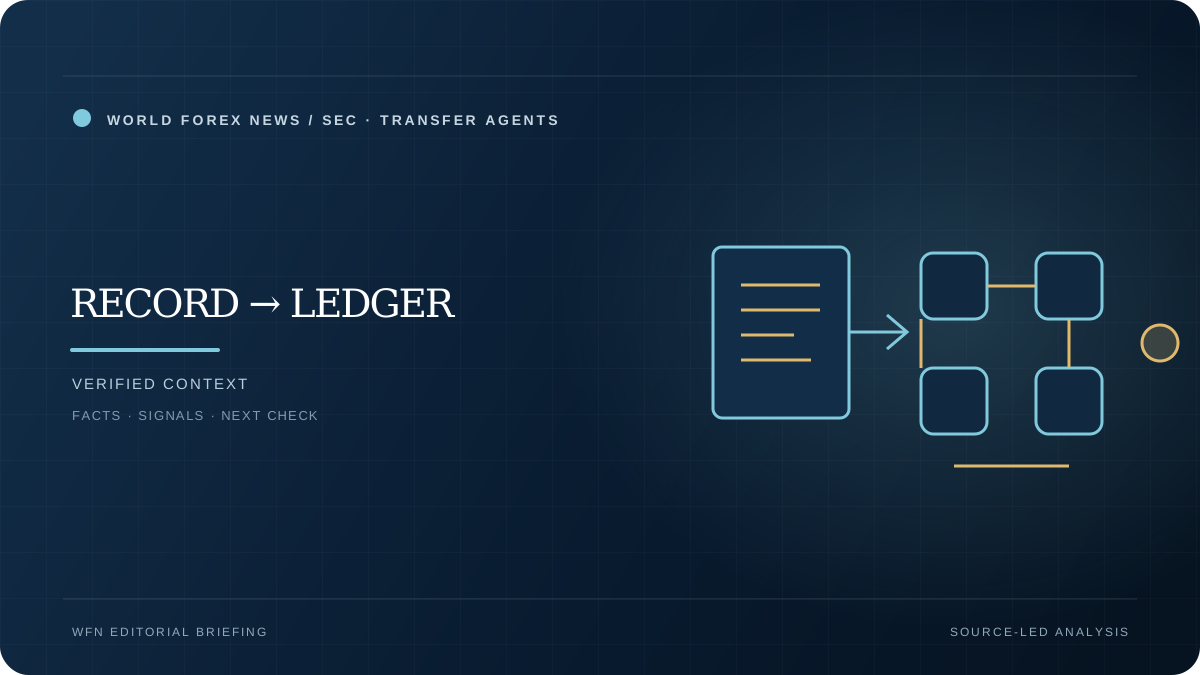
The SEC’s 1 September proposal would update rules and forms for registered transfer agents whose work supports securities issuance, ownership records and settlement. Its references to electronic recordkeeping and blockchain make it relevant to firms designing tokenized securities workflows, but the text remains a proposal subject to public comment. SEC: proposed modernization of registered transfer-agent rules, 1 September 2026
Follow the evidence
Trace how the event could reach markets, then inspect a competing explanation.
Compare explanations
Switch lenses to see what each account explains—and what remains uncertain.
The SEC says current transfer-agent rules do not fully reflect electronic communications, modern services and blockchain use.
The SEC says current transfer-agent rules do not fully reflect electronic communications, modern services and blockchain use.
The proposal is pending and centers on registered transfer agents; broker relevance depends on entity roles and final text.
The SEC is reopening a framework that dates back decades
The Commission said it proposed updates to transfer-agent rules and forms, explaining that registered agents now perform a broader range of functions than the rules adopted in the late 1970s and early 1980s expressly addressed. SEC: proposed modernization of registered transfer-agent rules, 1 September 2026
The release points to widespread electronic recordkeeping and communications, and to blockchain technology used in securities offerings and share transfers. The proposal would amend existing rules and forms, rescind one rule and introduce new rules for registered transfer agents and their activities. SEC: proposed modernization of registered transfer-agent rules, 1 September 2026
The SEC said the public comment period would remain open for 60 days after publication in the Federal Register. A proposal is a request for comment and a policy design, not an adopted obligation or an approval of any specific tokenization model. SEC: proposed modernization of registered transfer-agent rules, 1 September 2026
Digital records affect controls across the post-trade chain
For brokers, venues and issuers, the operational question is how transfer-agent records reconcile with brokerage books, custody records and settlement instructions. A distributed ledger may change how entries are written or synchronized, but it does not remove the need to establish who can amend a record, how errors are corrected and which record governs in a dispute.
If the final rules accommodate more electronic workflows, firms could have clearer paths for digital communications and ledger-based share records. The proposal alone does not establish that a particular chain, token or intermediary satisfies securities, custody, transfer-agent or investor-protection requirements.
Teams should track both the comment record and the proposing release’s detailed definitions. The practical impact will depend on final text, implementation dates and how existing rules apply to the exact legal entity and activity in a brokerage’s service chain.
Read the proposed text before treating it as a new obligation
Map which legal entity performs transfer-agent functions for each security and identify the authoritative ownership record. Document controls for identity, authorization, reconciliations, failed transfers, reversals and business continuity before relying on a technology label.
Compare the proposal’s operative text with current SEC rules and any later Federal Register notice. Keep a change log that distinguishes proposed provisions, current requirements and internal design choices; a press release is not a substitute for the rule text.
A competing view is that many broker operations will see little immediate change because the proposal is pending and applies to registered transfer agents. That is a reason to assess the legal role in each workflow, not to assume the proposal is irrelevant to firms that depend on those agents.