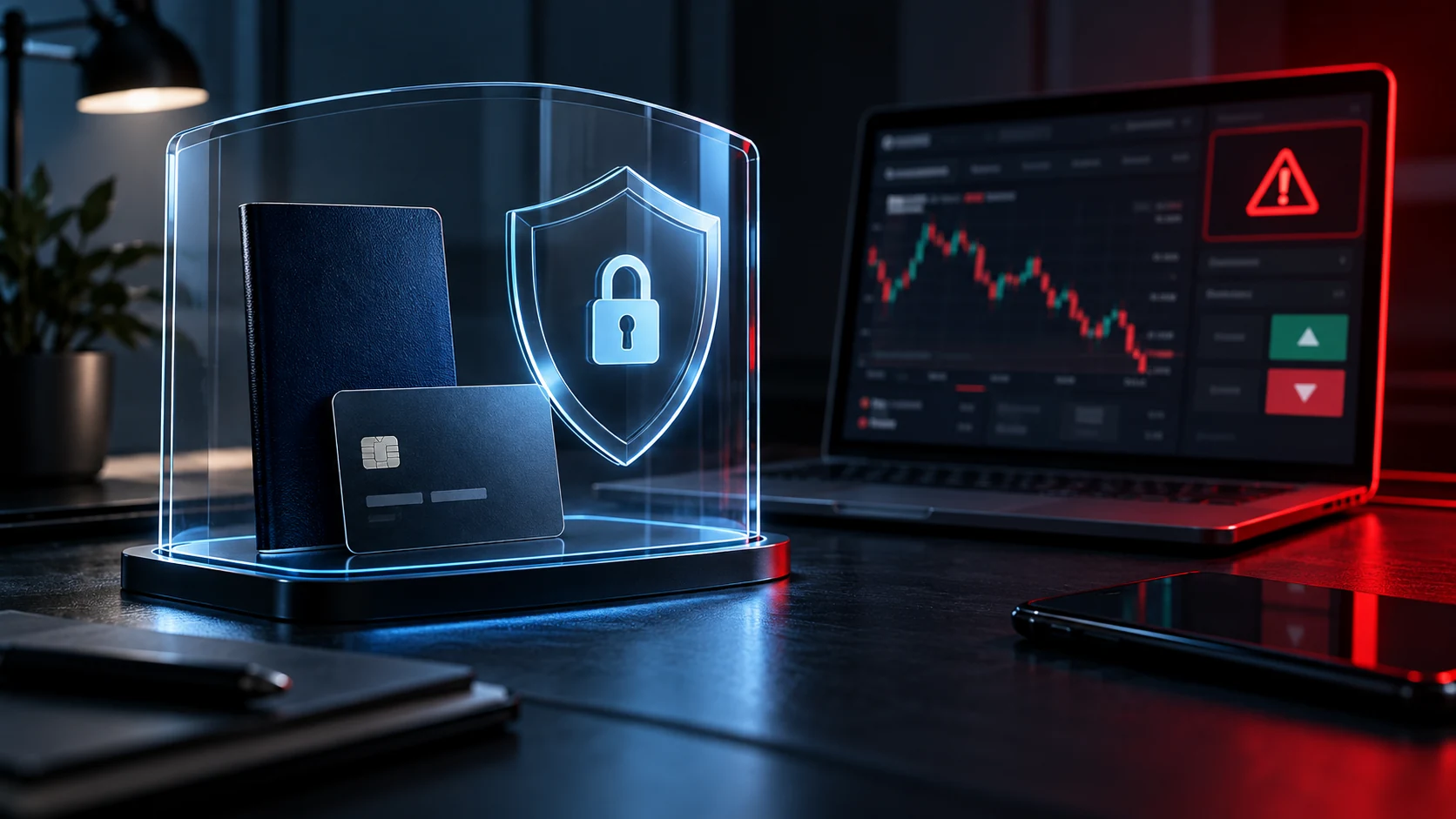
Investor.gov says complaints about Internet-based binary-options platforms include identity-theft concerns involving copies of credit cards, passports and driving licences collected for unspecified uses. A document request can resemble a legitimate know-your-customer process, so the decisive step is verifying the legal entity and its authority before transmitting sensitive files. Investor.gov: Binary Options Fraud
Follow the evidence
Trace how the event could reach markets, then inspect a competing explanation.
Compare explanations
Switch lenses to see what each account explains—and what remains uncertain.
Before uploading a document, ask which entity is collecting it, the legal purpose, retention period, storage location, access controls and deletion route. Be cautious when a platform requests full images of both sides of a payment card, security codes, one-time passwords or remote access to a device. These items can enable payment abuse and are not ordinary proof of identity. Watermarking a copy with the intended recipient and purpose may reduce some reuse, but it does not make an unverified recipient safe and may not be accepted by every legitimate process. Use the provider’s verified secure portal, not a messaging account controlled by an individual salesperson. Keep a record of what was sent and when.
Before uploading a document, ask which entity is collecting it, the legal purpose, retention period, storage location, access controls and deletion route. Be cautious when a platform requests full images of both sides of a payment card, security codes, one-time passwords or remote access to a device. These items can enable payment abuse and are not ordinary proof of identity. Watermarking a copy with the intended recipient and purpose may reduce some reuse, but it does not make an unverified recipient safe and may not be accepted by every legitimate process. Use the provider’s verified secure portal, not a messaging account controlled by an individual salesperson. Keep a record of what was sent and when.
Contact the issuing bank or document authority, monitor accounts, change exposed credentials and report suspicious transactions through the appropriate official channels. Preserve the domain, account identifiers, messages and upload receipts. Do not send more documents or money because a caller claims an additional verification step will release funds. This guidance cannot determine whether a specific request is fraudulent or guarantee that protective actions will prevent misuse. It provides a verification sequence grounded in official warnings. The core distinction is simple: identity checks are a regulated process only when the responsible entity and its authority are real and independently confirmed. The response should match the exposed data. A card image may call for bank monitoring or replacement; a passport copy may require guidance from the issuing authority; reused passwords require immediate changes across affected services. If remote-access software was installed, securing the device and connected accounts becomes a separate priority. Victims should write a dated inventory of what the operator received because stress can make later recall unreliable. They should also be cautious of follow-up callers who already know details of the first loss and promise recovery for a fee. Reporting the original website does not authenticate anyone who contacts the victim afterward. Every new request should be verified independently through an official channel.
Fraud complaints extend beyond trading losses
The SEC’s investor guidance groups binary-options complaints into refusal to credit or reimburse accounts, identity theft and alleged software manipulation. Its separate alert warns that representatives may falsely claim government rules require copies of payment cards, passports, licences or utility bills. The guidance tells investors to safeguard personal information. Investor.gov: Binary Options Fraud Investor.gov: Binary Options Websites may be Used for Fraudulent Schemes
Legitimate regulated firms may need identity verification, but that fact cannot authenticate a website. A copied logo, compliance badge or app-store listing is not evidence that the operator named in the terms is authorised. Search the official register for the exact legal name and domain, and verify the contact details through the regulator’s record rather than a link supplied by the salesperson.
Understand what is requested, why and how it is protected
Before uploading a document, ask which entity is collecting it, the legal purpose, retention period, storage location, access controls and deletion route. Be cautious when a platform requests full images of both sides of a payment card, security codes, one-time passwords or remote access to a device. These items can enable payment abuse and are not ordinary proof of identity.
Watermarking a copy with the intended recipient and purpose may reduce some reuse, but it does not make an unverified recipient safe and may not be accepted by every legitimate process. Use the provider’s verified secure portal, not a messaging account controlled by an individual salesperson. Keep a record of what was sent and when.
Act quickly if documents reached an unverified operator
Contact the issuing bank or document authority, monitor accounts, change exposed credentials and report suspicious transactions through the appropriate official channels. Preserve the domain, account identifiers, messages and upload receipts. Do not send more documents or money because a caller claims an additional verification step will release funds.
This guidance cannot determine whether a specific request is fraudulent or guarantee that protective actions will prevent misuse. It provides a verification sequence grounded in official warnings. The core distinction is simple: identity checks are a regulated process only when the responsible entity and its authority are real and independently confirmed.
The response should match the exposed data. A card image may call for bank monitoring or replacement; a passport copy may require guidance from the issuing authority; reused passwords require immediate changes across affected services. If remote-access software was installed, securing the device and connected accounts becomes a separate priority. Victims should write a dated inventory of what the operator received because stress can make later recall unreliable. They should also be cautious of follow-up callers who already know details of the first loss and promise recovery for a fee. Reporting the original website does not authenticate anyone who contacts the victim afterward. Every new request should be verified independently through an official channel.